
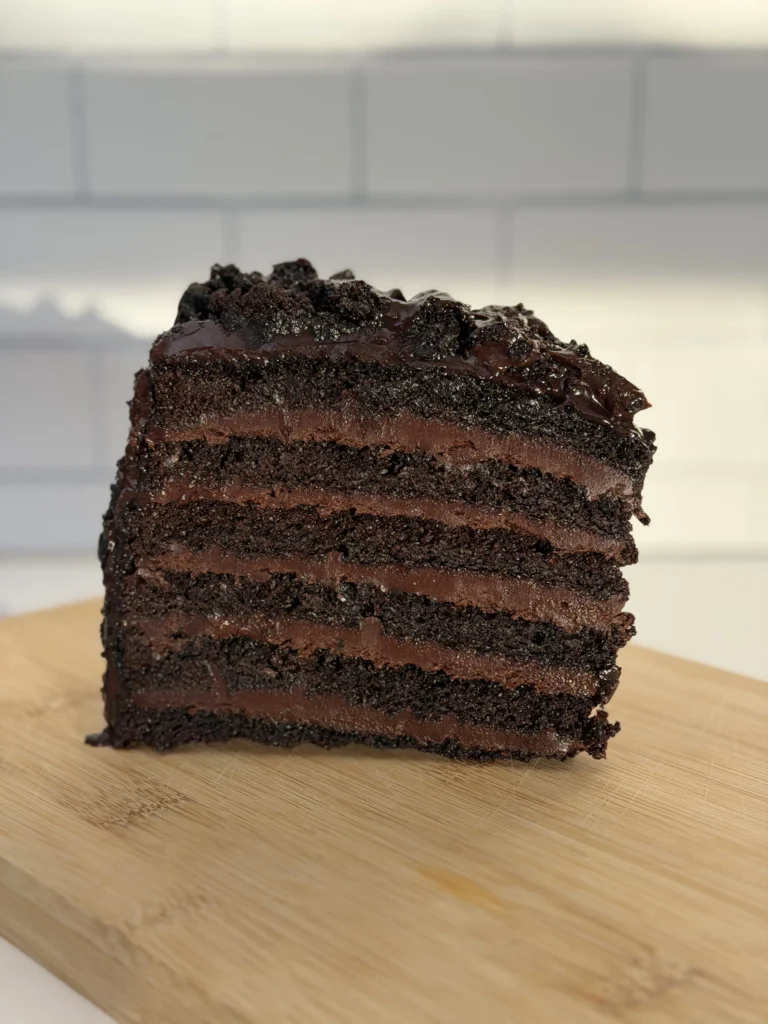
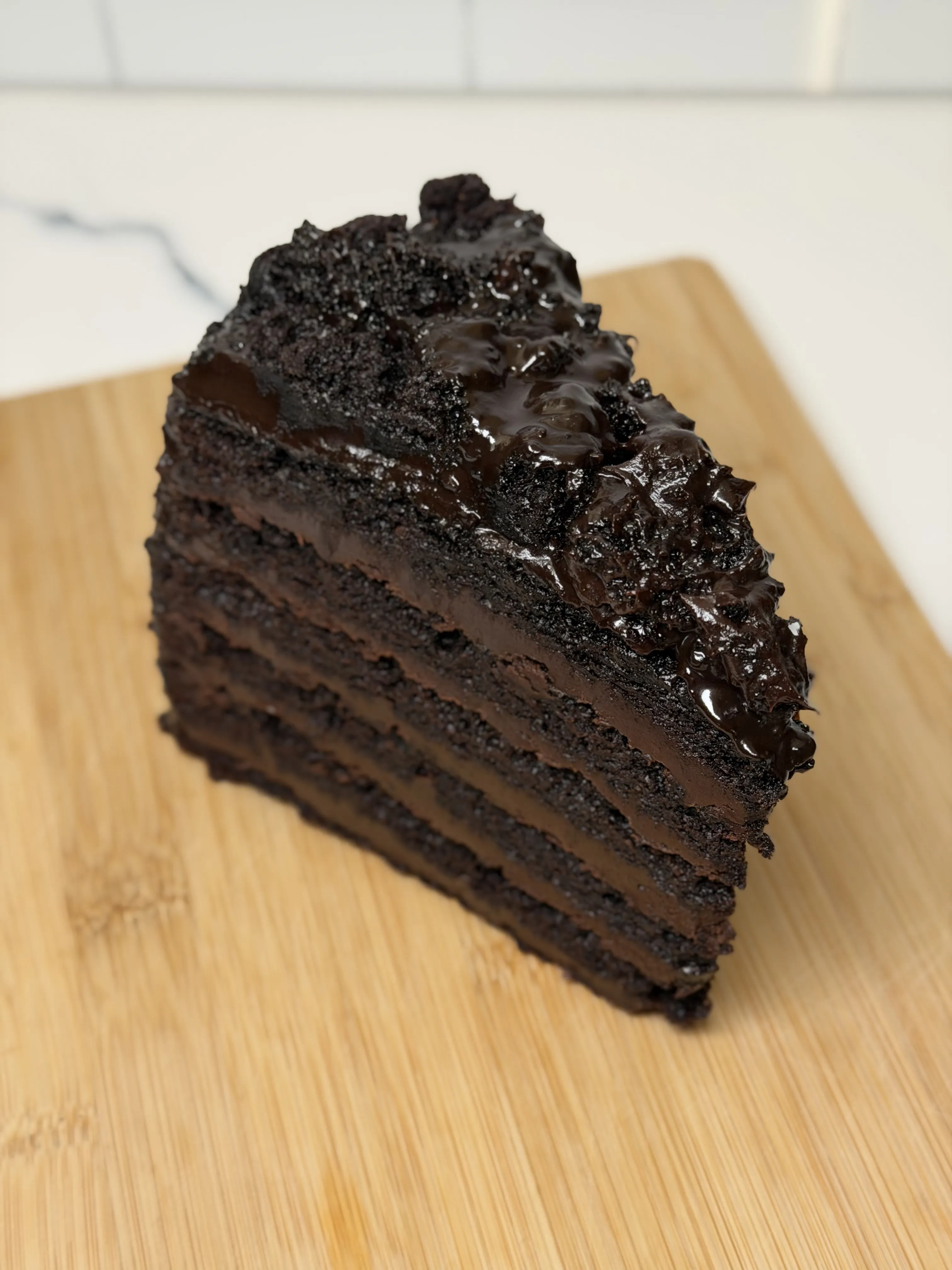
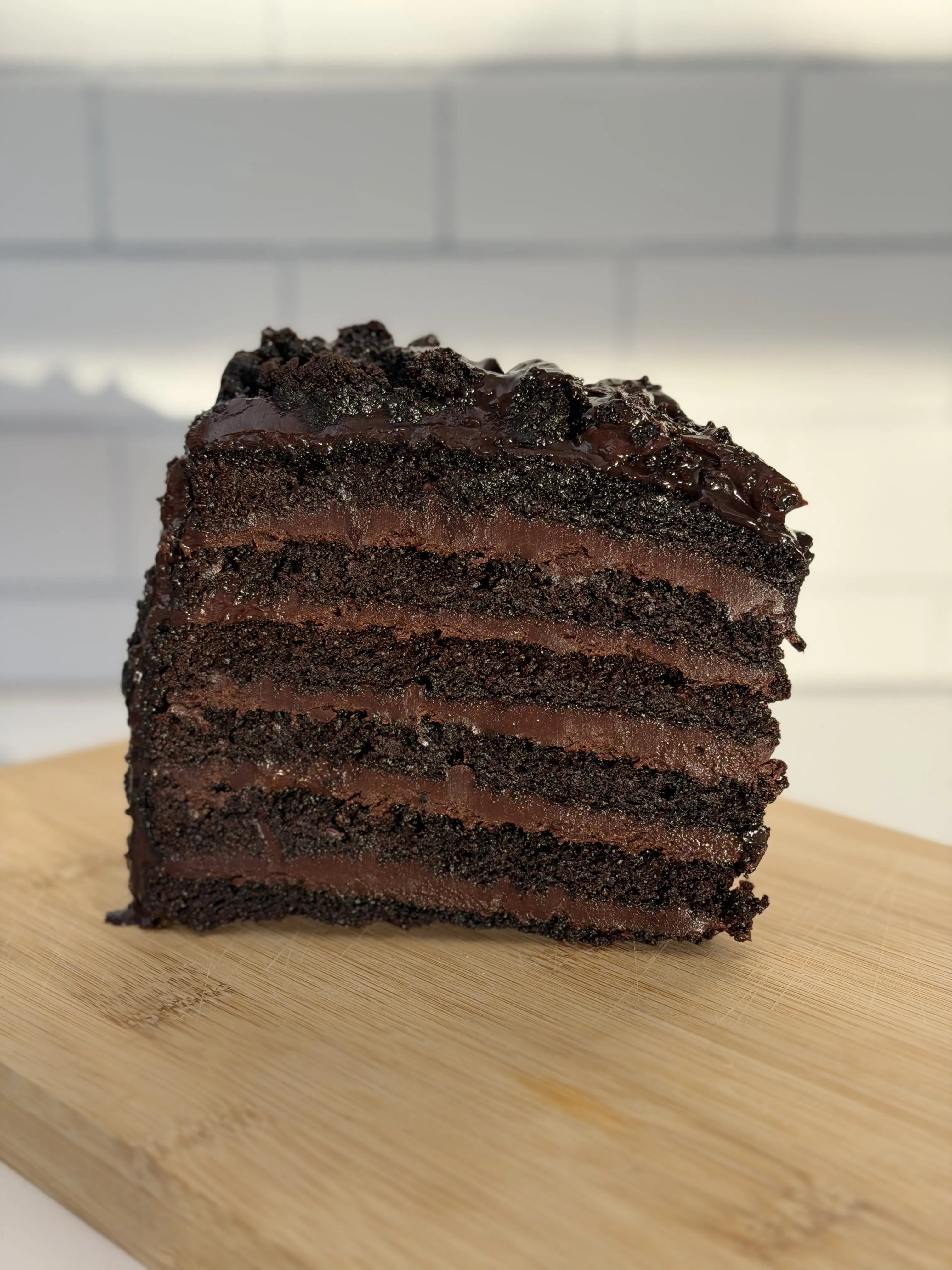
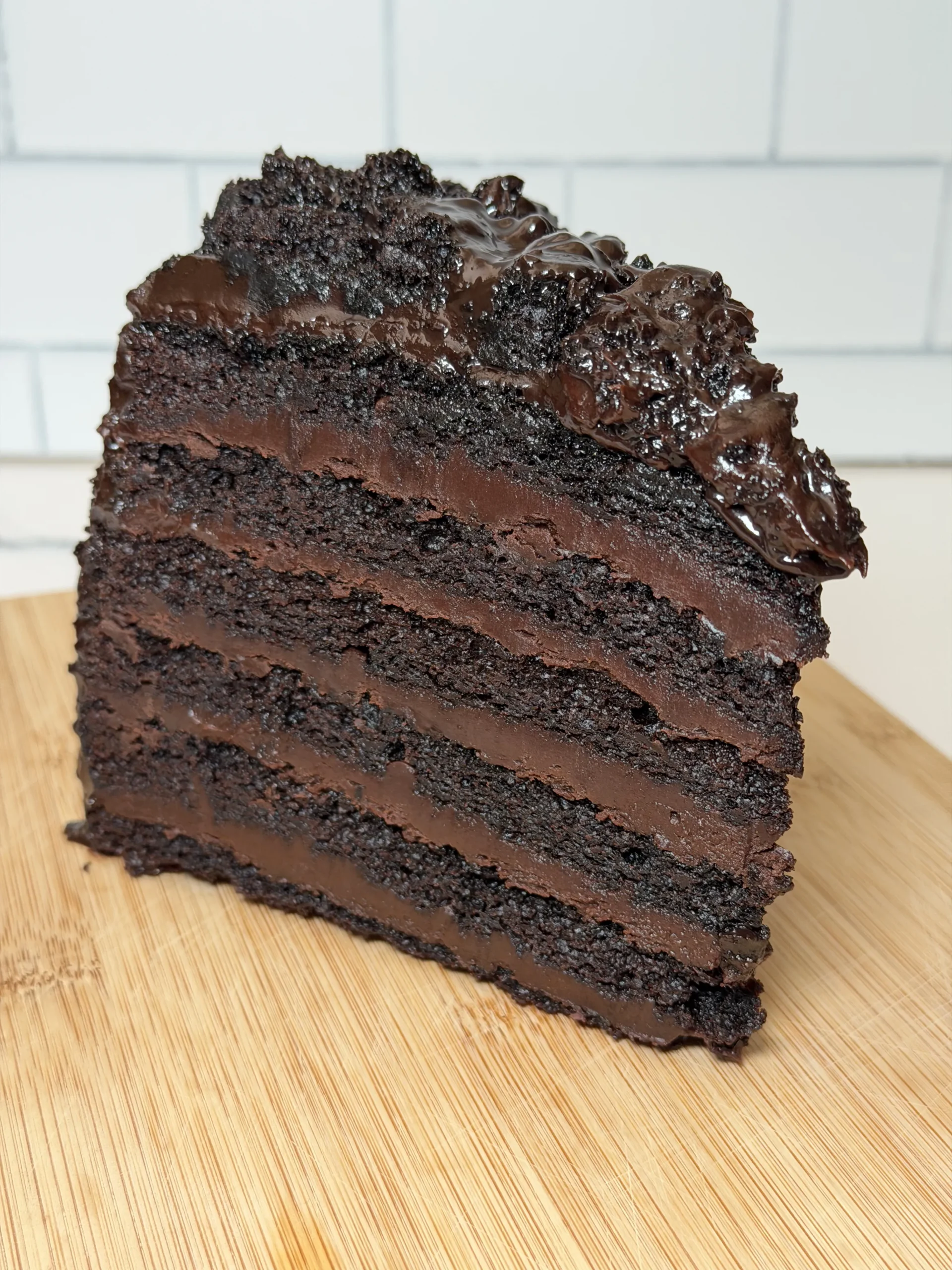
Great Wall of Chocolate cake is P.F. Chang’s most famous dessert for a reason. Six layers of dense, fudge-forward chocolate cake stacked with thick bittersweet ganache frosting, the entire outside coated in chocolate chips. This copycat version gets close to the original with one ingredient most recipes miss: seedless raspberry jam whisked into the ganache, adding a subtle tartness that keeps 18 ounces of chocolate from tasting flat. The cake itself uses melted unsweetened chocolate in the batter for a brownie-like density that holds up under all that frosting.
Jump to Recipe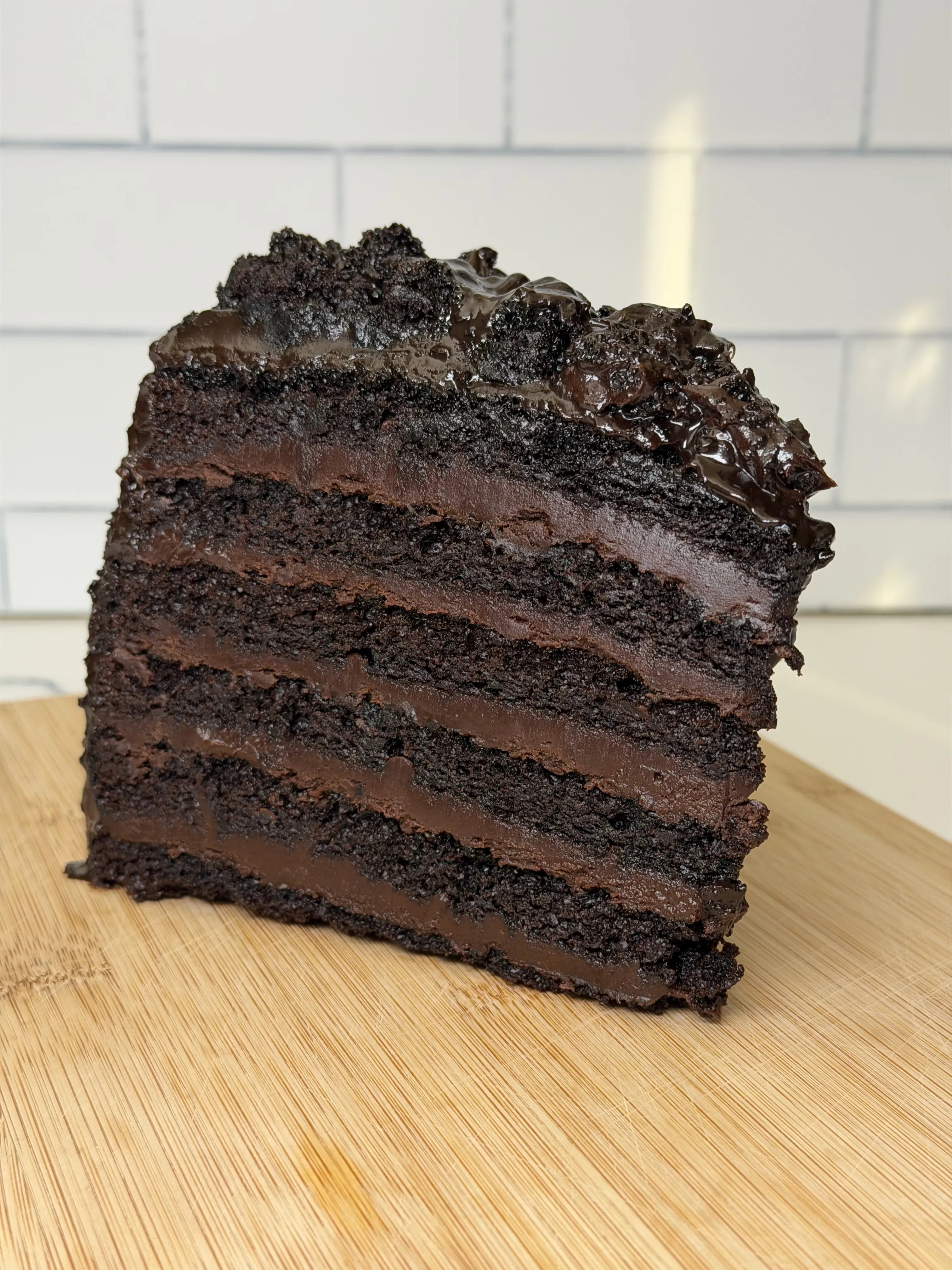
What Makes the Great Wall of Chocolate Cake Different
Six Layers of Dense, Fudgy Cake
The Great Wall of Chocolate at P.F. Chang’s is not a light, fluffy celebration cake. It is a towering slab of dense, fudge-forward chocolate with six distinct layers separated by thick ganache frosting. The cake layers themselves contain melted unsweetened chocolate mixed directly into the batter, which produces a richer, darker crumb than cocoa powder alone. Consequently, every layer has a texture closer to a brownie than a traditional cake, which is exactly the point. The density is what allows the cake to support the weight of all that ganache without collapsing.
To get six layers from two 9-inch round pans, you bake two thick cakes and slice each horizontally into three even layers. A long serrated knife and a steady hand are all you need. The thinner layers absorb more ganache per bite, which is why the restaurant version tastes so intensely chocolatey from edge to center. If six layers feels ambitious, four layers still delivers the effect. The visual drama and the chocolate-to-ganache ratio are what define this dessert.
The Raspberry Jam Secret
The ganache frosting contains 1/3 cup of seedless raspberry jam, and this is the ingredient most copycat recipes leave out. The jam does not make the cake taste like raspberry. What it does is add a subtle tartness and fruity depth that prevents the chocolate from becoming one-dimensional. Without it, the ganache tastes like pure chocolate and butter, which is rich but eventually monotonous over six layers. The jam brightens the frosting just enough to keep your palate interested through every bite. Furthermore, the acidity in the raspberry cuts the sweetness, so the cake tastes decadent without being cloying.
Chocolate Quality Is the Variable That Matters Most
Unsweetened for the Cake, Bittersweet for the Ganache
This recipe uses two types of chocolate for two different purposes. The cake batter calls for 5 ounces of unsweetened chocolate (100% cacao, no sugar). Unsweetened chocolate delivers maximum cocoa flavor without adding sweetness. The sugar in the batter provides all the sweetness the cake needs. If you substitute semisweet chocolate in the batter, the cake will be sweeter but less intensely chocolatey.
The ganache uses 18 ounces of bittersweet chocolate (60% to 70% cacao). Bittersweet has enough sugar to create a smooth, spreadable frosting without additional sweeteners, but enough cocoa to keep the flavor deep and complex. Specifically, look for chocolate bars or chips labeled 60% to 70% cacao. Anything higher than 72% can produce a ganache that tastes slightly bitter and sets too firm. Anything lower than 55% tastes more like milk chocolate and loses the intensity this cake requires.
Why Grocery Store Chips Will Not Cut It
Standard chocolate chips (Nestle Toll House, for example) contain stabilizers and less cocoa butter than bar chocolate. These additives help chips hold their shape during baking but prevent them from melting into a smooth ganache. The result is a grainy, thick frosting instead of a silky one. For the ganache, use chopped bar chocolate or high-quality baking chocolate. Ghirardelli, Guittard, Valrhona, and Callebaut all produce bittersweet chocolate that melts cleanly. Additionally, chop the chocolate finely before adding the hot cream. Smaller pieces melt faster and more evenly, reducing the risk of seized, lumpy ganache.
Building the Ganache Frosting
The Pour-and-Wait Method
Ganache is one of the simplest frostings to make, but timing is everything. Heat the heavy cream with the raspberry jam, butter, and salt until it just reaches a simmer. Do not boil. Boiling cream can break and separate. Pour the hot mixture over the chopped bittersweet chocolate in a large bowl and let it sit undisturbed for 60 seconds. The residual heat melts the chocolate gradually. Then whisk from the center outward in slow, steady circles until the ganache is completely smooth and glossy. Stir in the vanilla at the end.
The ganache needs time to thicken before you can frost the cake. You have two options: cover with plastic wrap and leave at room temperature overnight (best result, most even consistency), or refrigerate for 1 to 1.5 hours, checking every 20 minutes. The ganache should reach a thick, spreadable consistency similar to peanut butter. If it gets too firm in the fridge, let it sit at room temperature for 15 minutes and stir to loosen. Over-chilled ganache is difficult to spread without tearing the cake layers.
How Much Ganache You Actually Need
This recipe produces enough ganache to frost six layers generously and coat the entire outside of the cake. Spread about 3 to 4 tablespoons of ganache between each layer. Use the remainder for the sides and top. The sides get frosted first, then the top. This order prevents the top layer from sliding while you work on the sides. If you are pressing chocolate chips into the exterior, do it immediately after frosting while the ganache is still tacky. Once it sets, the chips will not stick.
Great Wall of Chocolate Cake
Ingredients
Grocery store chips contain stabilizers that prevent smooth melting. Use chopped bar chocolate (Ghirardelli, Guittard, Valrhona) for the ganache. The difference in texture and flavor is significant.
It does not make the cake taste like raspberry. The jam adds a subtle tartness that prevents 18 ounces of chocolate from tasting monotonous. It brightens the ganache and cuts the sweetness. Do not skip it.
This cake tastes better after sitting for a few hours (or overnight in the fridge). The ganache firms up, the layers bond together, and the flavors deepen. Pull it out 20 minutes before serving for the best texture.
Step-by-Step Instructions
Step 1: Bake the Cake Layers
Preheat oven to 350°F. Grease two 9-inch round cake pans, line the bottoms with parchment paper, and dust the sides with flour. Tap out the excess. Melt 5 ounces of unsweetened chocolate in a microwave-safe bowl in 30-second intervals, stirring between each, until completely smooth. Set aside to cool for 10 minutes.
In a medium bowl, whisk together the flour, baking powder, and salt. In a large bowl, beat the softened butter and sugar with an electric mixer until light and fluffy, about 3 minutes. Add the eggs one at a time, beating well after each addition. Mix in the vanilla extract. Pour in the cooled melted chocolate and beat until fully combined, scraping down the sides of the bowl.
Add the dry ingredients and milk in alternating thirds, starting and ending with the dry ingredients. Mix on low speed until just combined after each addition. Do not overmix. Divide the batter evenly between the two prepared pans and spread level. Bake for 25 to 30 minutes, until a toothpick inserted in the center comes out clean. Cool in pans for 10 minutes, then invert onto wire racks and cool completely.
Step 2: Make the Ganache
Place 18 ounces of finely chopped bittersweet chocolate in a large heatproof bowl. In a saucepan, combine the heavy cream, raspberry jam, butter, and salt. Heat over medium, stirring occasionally, until it just reaches a simmer. Do not boil. Pour the hot cream mixture over the chopped chocolate and let it sit undisturbed for 60 seconds.
Whisk slowly from the center outward until the ganache is completely smooth and glossy. Stir in the vanilla extract. Cover with plastic wrap pressed directly against the surface and let the ganache thicken. Ideal method: room temperature overnight. Quick method: refrigerate for 1 to 1.5 hours, checking every 20 minutes. The ganache should reach a thick, spreadable consistency.
Step 3: Slice into Layers
Using a long serrated knife, slice each cooled cake horizontally into 3 even layers. Place the knife against the side of the cake at the one-third mark, rotate the cake slowly, and cut through with a gentle sawing motion. A turntable makes this easier but is not required. For the most even cuts, insert toothpicks around the circumference at the cut line as guides. You should have 6 total layers.
If the layers are fragile, chill them in the refrigerator for 20 minutes before assembling. Cold layers are firmer and less likely to crack or absorb too much ganache during stacking.
Step 4: Assemble the Cake
Place the first cake layer on a serving plate or cake board. Spread 3 to 4 tablespoons of ganache evenly across the top. Add the next layer and repeat until all six layers are stacked. Apply a thin crumb coat of ganache around the sides and top to seal in crumbs. Refrigerate for 15 minutes to set the crumb coat. Then apply the final, thick layer of ganache to the sides first, then the top. Smooth with an offset spatula.
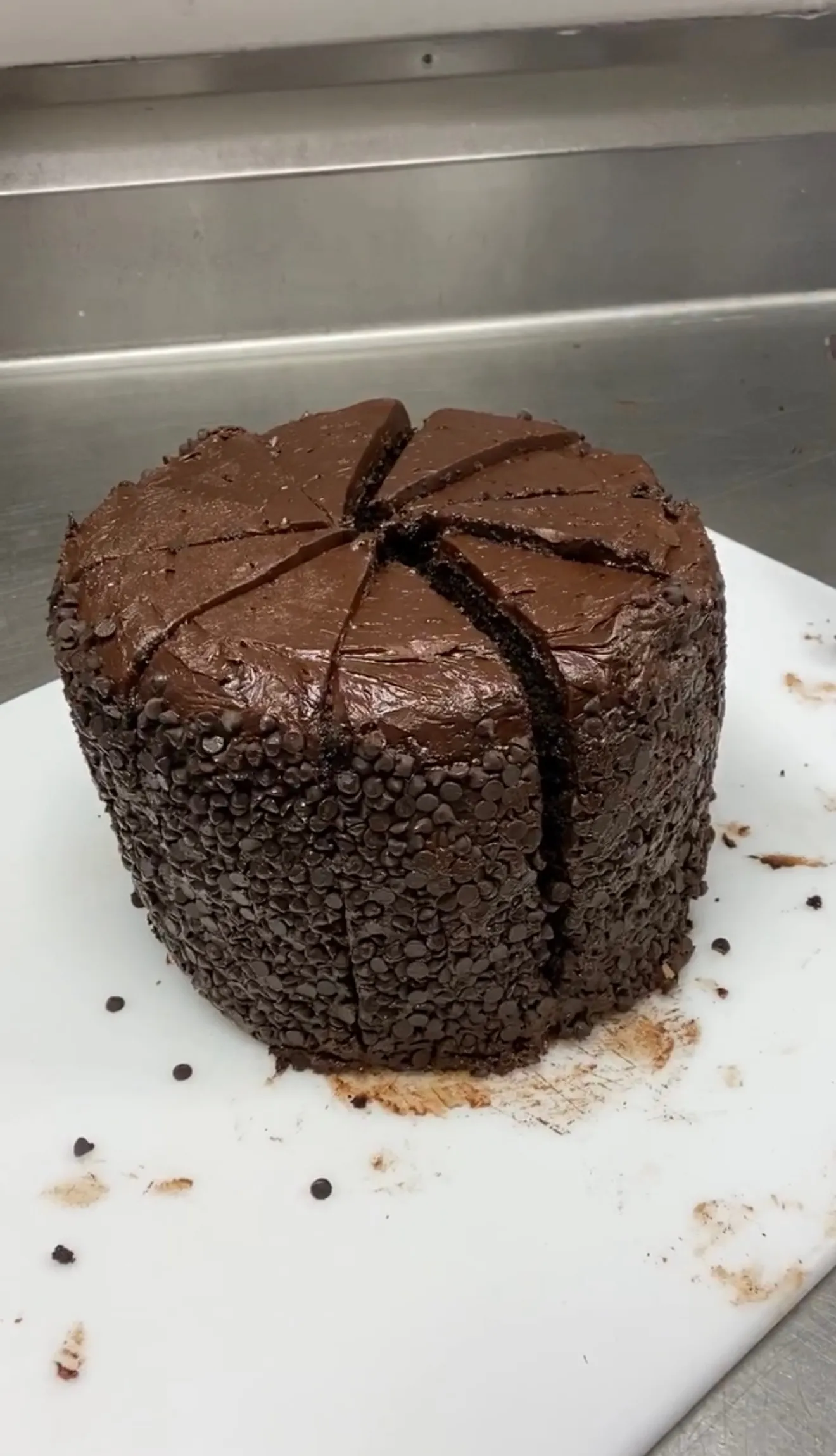
If using chocolate chips, press them into the sides of the cake immediately while the ganache is still tacky. Cup a handful of chips in your palm and press gently against the frosting, working your way around the entire cake. Scatter additional chips across the top if desired.
Step 5: Rest and Serve
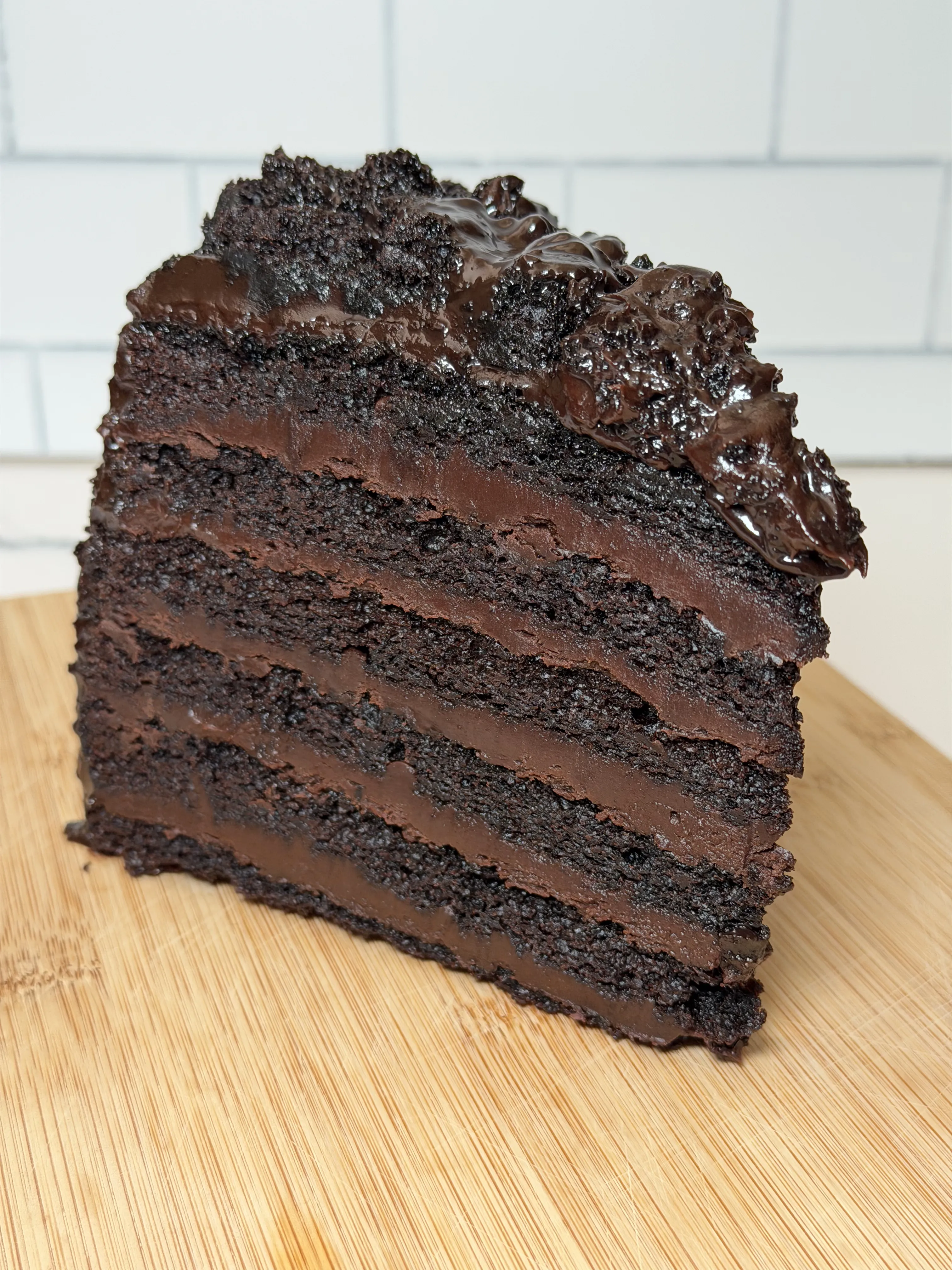
Refrigerate the assembled cake for at least 2 hours, or overnight for the best results. The resting time allows the ganache to firm up, the layers to bond together, and the chocolate flavor to deepen. Pull the cake out of the refrigerator 20 minutes before serving so the ganache softens slightly and the texture becomes fudgy rather than firm. Slice with a sharp knife dipped in hot water and wiped clean between cuts for the cleanest edges.
Great Wall of Chocolate Cake (P.F. Chang’s Copycat)
Ingredients
Equipment
Method
- Preheat oven to 350°F. Grease two 9-inch round cake pans, line bottoms with parchment, and dust sides with flour. Melt unsweetened chocolate and cool 10 minutes.
- Whisk flour, baking powder, and salt in a medium bowl. In a large bowl, beat softened butter and sugar until fluffy, about 3 minutes. Add eggs one at a time, then vanilla. Mix in cooled melted chocolate.
- Add dry ingredients and milk in alternating thirds, starting and ending with dry. Mix on low until just combined. Divide between pans. Bake 25-30 minutes until a toothpick comes out clean. Cool completely.
- For ganache: place chopped bittersweet chocolate in a large bowl. Heat cream, raspberry jam, butter, and salt to a simmer (do not boil). Pour over chocolate, wait 60 seconds, then whisk until smooth. Stir in vanilla. Let thicken overnight at room temp or refrigerate 1-1.5 hours.
- Slice each cake horizontally into 3 layers using a serrated knife (6 layers total). Stack layers with 3-4 tablespoons of ganache between each. Apply a thin crumb coat, chill 15 minutes, then frost sides and top with remaining ganache.
- Press chocolate chips into sides while ganache is tacky (optional). Refrigerate at least 2 hours. Remove 20 minutes before serving. Slice with a hot, clean knife.
Notes
Great Wall of Chocolate Cake — FAQ
Great Wall of Chocolate Questions
The Great Wall of Chocolate is P.F. Chang’s signature dessert. It consists of six layers of rich, dense chocolate cake separated by thick chocolate ganache frosting, with semi-sweet chocolate chips pressed into the exterior. It is one of the most popular items on the menu and is designed to be shared.
The raspberry jam does not make the cake taste like raspberry. It adds a subtle tartness and depth that prevents the chocolate from becoming one-dimensional across six layers. The acidity also cuts the sweetness of 18 ounces of bittersweet chocolate, keeping the ganache balanced rather than cloying. This is the ingredient most copycat recipes skip, and it makes a noticeable difference.
You can, but the result will be different. Melted unsweetened chocolate contains cocoa butter, which makes the cake denser, richer, and more fudge-like. Cocoa powder produces a lighter, more crumbly texture. The Great Wall’s defining quality is its dense, brownie-like crumb, which comes from the melted chocolate. If you substitute, use 3/4 cup Dutch-process cocoa and increase the butter by 2 tablespoons.
Use a long serrated knife. Insert toothpicks around the cake at the one-third and two-thirds marks as cutting guides. Score a shallow line around the circumference first, then cut through with a slow, gentle sawing motion while rotating the cake. Chilling the cakes for 20 minutes before slicing makes them firmer and easier to cut cleanly. Four layers is also acceptable if six feels too difficult.
Ganache and Storage
Two likely causes: the chocolate was not chopped finely enough, or the cream was boiled instead of simmered. Boiling cream can cause chocolate to seize. To fix lumpy ganache, warm it gently over a double boiler (bowl over simmering water) while stirring slowly until smooth. If it is grainy from using chocolate chips, the stabilizers in the chips are the cause. Switch to chopped bar chocolate for the smoothest result.
Yes, and it actually improves with time. The assembled cake can be refrigerated for up to 3 days. The ganache firms up, the layers bond, and the chocolate flavor deepens. The cake layers can also be baked, wrapped tightly in plastic, and frozen for up to 2 months before assembling. Thaw overnight in the refrigerator before slicing and frosting.
Use bittersweet chocolate in the 60% to 70% cacao range. This provides enough sweetness for a spreadable frosting while keeping the flavor deep and complex. Anything above 72% can taste bitter and sets too firm. Anything below 55% leans toward milk chocolate territory and loses the intensity this cake needs. Ghirardelli, Guittard, and Valrhona are reliable options.