
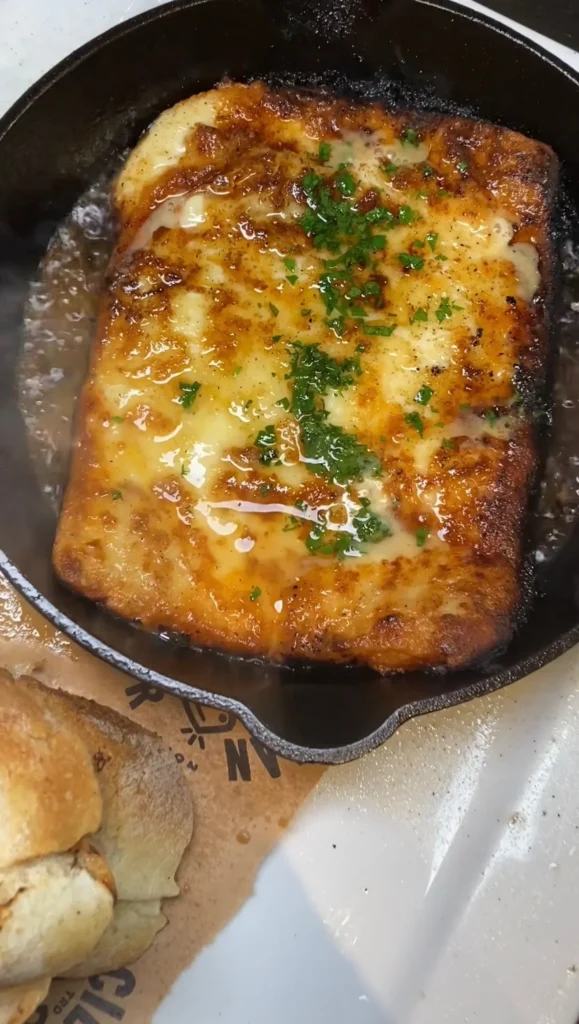
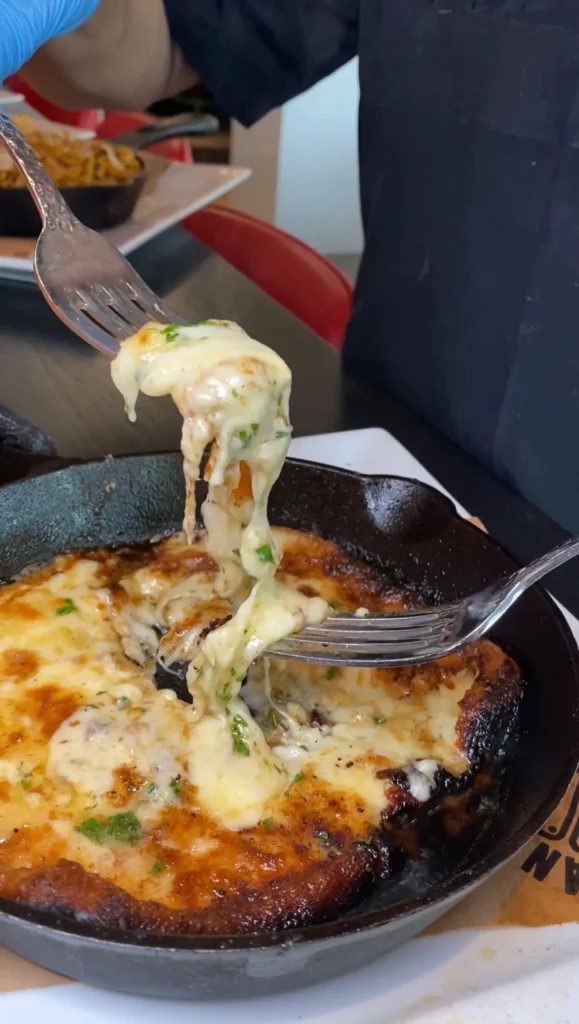
Greek saganaki is fried cheese with a golden, shattering crust and a soft, gooey center that pulls apart when you cut into it. Three ingredients (cheese, flour, olive oil), one pan, and about five minutes of cooking. The dish gets its name from the small two-handled skillet it is traditionally cooked in, and it is one of the most popular mezze appetizers in Greek tavernas. This recipe covers the classic pan-fried method plus the optional brandy flambe for when you want the full restaurant theatrics at home.
Jump to RecipeWhy the Right Cheese Makes or Breaks Saganaki
Kefalograviera Is the Gold Standard
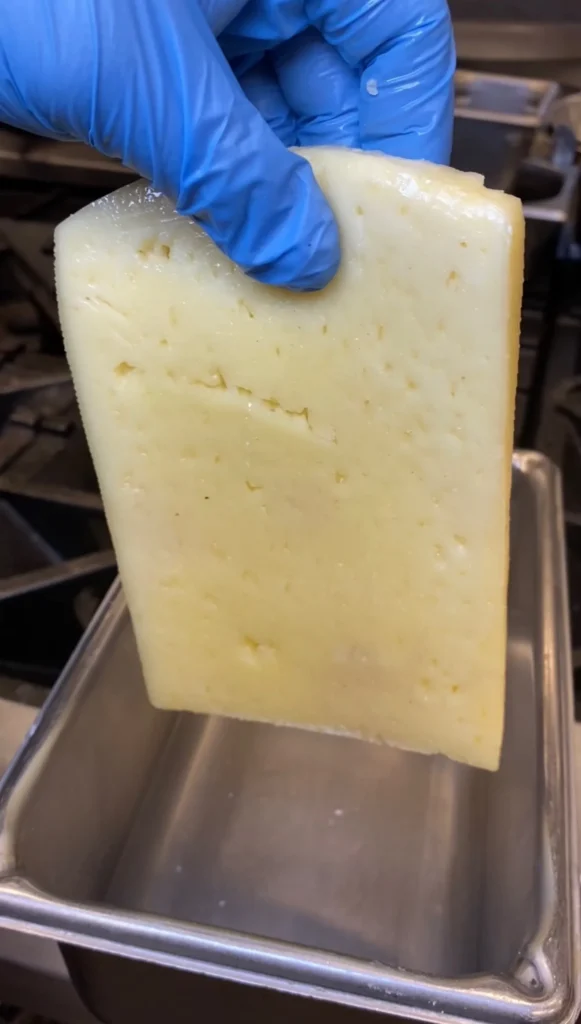
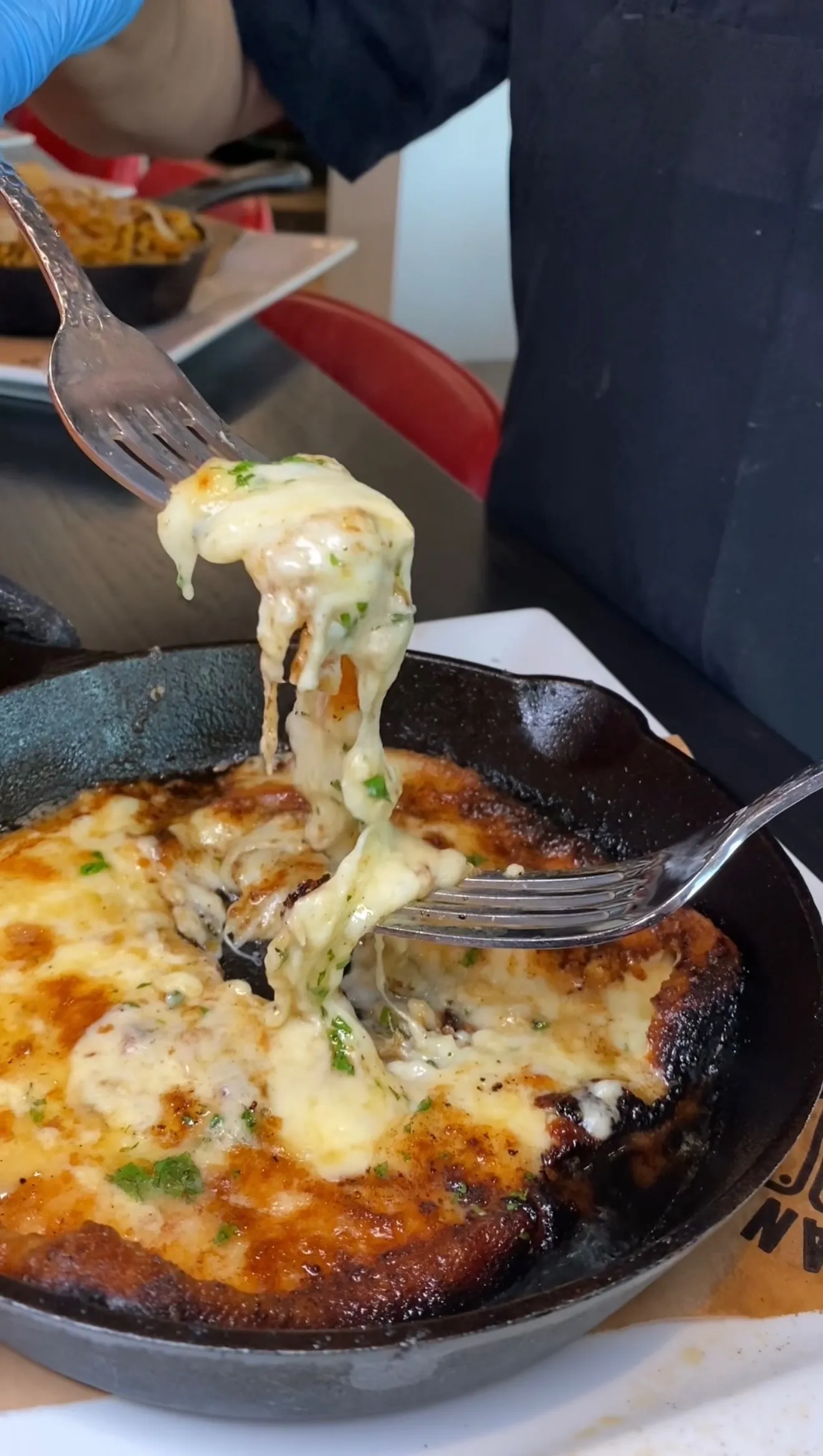
Not all cheese can handle a hot skillet without turning into a puddle. Kefalograviera is the preferred cheese for saganaki because it is a hard, salty sheep’s milk cheese that softens and becomes gooey under heat without completely melting. The exterior firms up into a golden crust while the interior turns creamy and stretchy. This texture contrast, crispy shell to warm, yielding center, is the entire point of the dish.
If you cannot find kefalograviera, graviera is the next best choice. It is a Greek gruyere-style cheese with a nutty, slightly sweet flavor that fries beautifully. Kasseri also works well and is easier to find at stores like Whole Foods. All three cheeses share the critical quality: they soften without liquefying.
What Not to Use
Mozzarella, cheddar, and other high-moisture cheeses will melt completely in the pan. You will end up with a greasy pool instead of a slab with structure. Feta is too crumbly for a traditional saganaki, although baked feta preparations exist as a separate dish. Halloumi is a viable substitute if you cannot find any of the Greek cheeses listed above. It has a higher melting point than most cheeses, so it holds its shape aggressively. However, halloumi produces a squeaky, firm texture rather than the gooey interior that defines authentic saganaki.
Where to Find Greek Cheese
Greek specialty stores and Mediterranean markets are the most reliable sources. Whole Foods carries kasseri in most locations. Online retailers that specialize in Greek imports stock kefalograviera and graviera year-round. Additionally, some Italian delis carry kefalotyri, a close relative that also works for saganaki. If you live near a Greek community, check the shops around Greek Orthodox churches, as they often stock imported cheeses.
The Water-and-Flour Technique Explained
Why You Rinse the Cheese First
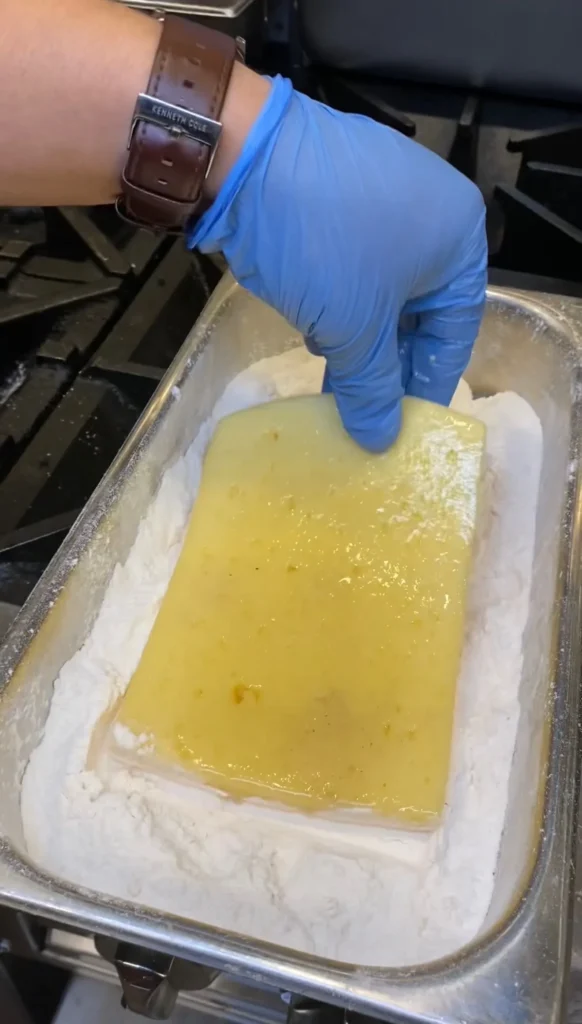
Running the cheese under cold water before dredging in flour is not a cleaning step. The water creates a thin wet layer on the surface that allows the flour to adhere evenly. Without this step, the flour slides off dry cheese, and you get patchy, uneven browning in the pan. Consequently, some spots burn while others never develop a crust at all.
Flour Creates the Crust, Not the Cheese
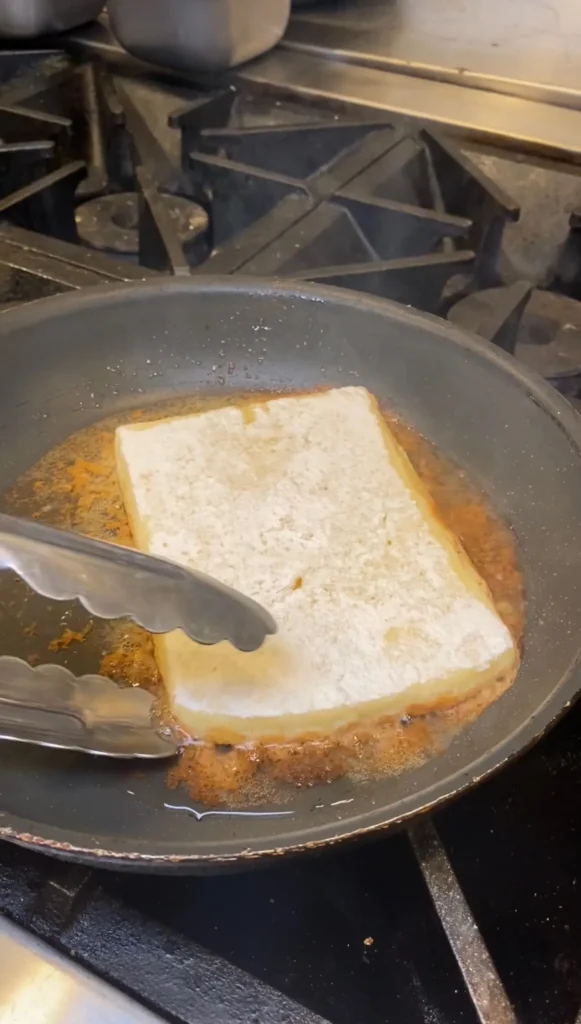
The golden crust on saganaki is not caramelized cheese. It is a thin layer of flour that toasts in the hot olive oil. This flour coating serves two purposes: it provides the crispy exterior, and it acts as a barrier between the cheese and the oil, preventing the cheese from sticking to the pan and melting into it. Shake off any excess flour after dredging. Too much flour creates a thick, bready coating that tastes starchy and overwhelms the cheese.
Thickness Matters
Cut the cheese approximately 1/2 inch thick. Thinner slices melt too quickly and lose their shape before the crust develops. Thicker slices take too long to warm through, resulting in a hot exterior with a cold, firm center. At 1/2 inch, the cheese heats evenly: the outside crisps in about 2 minutes per side while the interior reaches that perfect soft, gooey consistency.
Pan Temperature: The Most Common Mistake
Medium-High Heat, Not Maximum
The skillet needs to be hot enough that the flour coating begins browning immediately on contact. Medium-high heat is the target. If the pan is too cool, the cheese sits in warm oil without forming a crust, absorbs the oil, and eventually melts into the pan. If the pan is too hot, the flour burns before the interior softens.
How to Test the Temperature
Add the olive oil to the pan and let it heat for 60 to 90 seconds. Sprinkle a tiny pinch of flour into the oil. If it sizzles immediately and begins to brown within a few seconds, the oil is ready. If the flour just sits there, give it more time.
Use a Small, Heavy Pan
Traditional saganaki pans are small, two-handled skillets made from heavy metal. A 6 to 8 inch cast iron skillet is the closest equivalent. The small diameter concentrates the oil around the cheese, ensuring full contact. A large pan spreads the oil too thin, and the cheese does not fry evenly. Furthermore, cast iron retains heat well, which prevents the temperature from dropping when you add the cold cheese. Nonstick works but does not produce the same level of crust.
The Flambe: Optional but Spectacular
How to Safely Flambe at Home
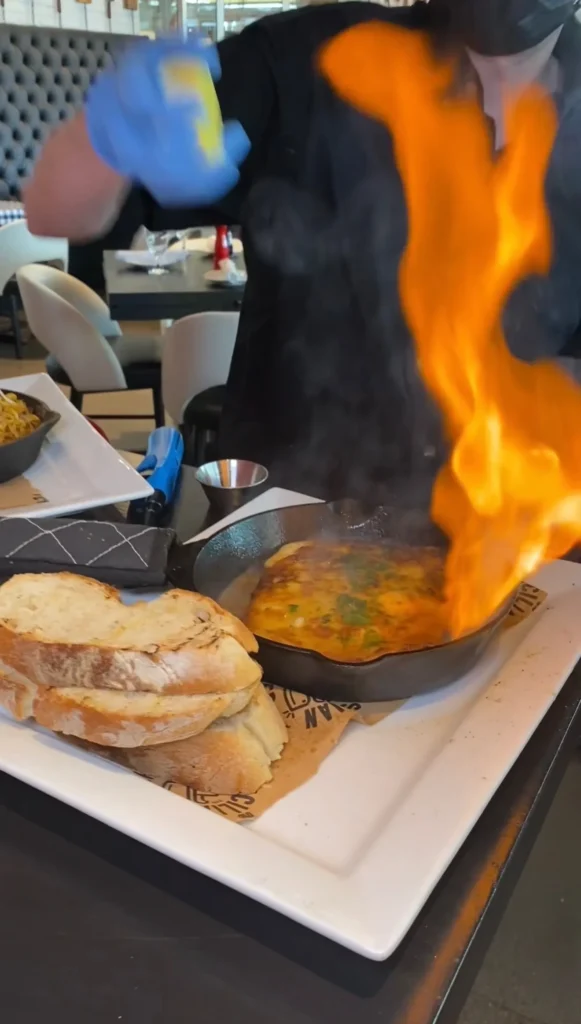
The flaming saganaki tradition actually originated in Greek-American restaurants in Chicago during the 1960s, not in Greece itself. However, it has become synonymous with the dish worldwide. The technique adds a subtle sweetness from the burned-off alcohol and creates a dramatic tableside moment.
Remove the pan from the heat source before adding alcohol. Pour approximately 1 to 2 tablespoons of brandy or ouzo over the hot cheese. Return the pan to the burner and stand back. The alcohol should ignite on its own from the residual heat. If it does not, use a long lighter or match. The flame rises quickly and burns out within 5 to 10 seconds as the alcohol evaporates.
Safety Rules for Flaming
Never pour alcohol directly from the bottle. Always measure it into a small cup first. Keep the bottle far from the stove. Do not flambe under a low cabinet, near curtains, or with loose sleeves. Have a lid nearby to smother the flame if needed. Keep children and pets out of the kitchen during this step. If you prefer the flavor of the brandy without the fire, simply pour it into the hot pan and let it cook off for 30 seconds. The alcohol evaporates without a flame, leaving behind the same subtle sweetness.
How to Serve Saganaki
Lemon Is Not Optional
A generous squeeze of fresh lemon juice over the hot cheese is essential, not a garnish. The acidity cuts through the richness and salt of the fried cheese, brightening every bite. Without it, saganaki is one-dimensional: salty and rich. With it, the dish becomes balanced: salty, rich, and bright. Squeeze the lemon immediately after removing from the pan, while the cheese is still sizzling.
Serve Immediately
Saganaki waits for no one. The moment it leaves the pan, the crust begins to soften and the interior starts to firm up as it cools. Within 5 minutes, the magical contrast between crispy outside and gooey inside is gone. Serve it on a hot plate with warm pita bread, crusty sourdough, or a simple side of olives. It belongs at the beginning of a meal as a mezze, alongside other small plates like tzatziki, dolmades, spanakopita, or a simple Greek salad.
Traditional Greek Saganaki
Ingredients
Kefalograviera is the best. Graviera is second. Kasseri is third. All three soften without liquefying. Do not use mozzarella, cheddar, or any high-moisture cheese. It will melt into a pool.
Rinse the cheese under cold water before dredging in flour. The wet surface is what makes the flour stick evenly. Without this step, you get patchy browning and the cheese sticks to the pan.
If the cheese sticks, your pan was not hot enough. The oil should sizzle immediately when a pinch of flour hits it. Medium-high heat, small heavy pan, 60 to 90 seconds to preheat.
Step-by-Step Instructions
Step 1: Prep the Cheese
Slice your kefalograviera (or kasseri or graviera) into a block approximately 1/2 inch thick. Rinse the cheese briefly under cold running water. This wet surface is what allows the flour to stick. Dredge the cheese in all-purpose flour on all sides, then shake off the excess. The coating should be thin and even.
Step 2: Heat the Pan
Place a small, heavy skillet (6 to 8 inches) over medium-high heat. Add 2 tablespoons of olive oil and let it heat for 60 to 90 seconds. Test readiness by sprinkling a tiny pinch of flour into the oil. It should sizzle immediately.
Step 3: Fry the Cheese
Place the floured cheese into the hot oil. Do not move it. Let it cook undisturbed for approximately 2 minutes until the bottom develops a golden brown crust. Flip carefully with a spatula and cook the other side for another 2 minutes. The exterior should be crispy and golden. The interior should be soft and beginning to bulge slightly at the edges.
Step 4: Flambe (Optional)
Remove the pan from heat. Pour 1 to 2 tablespoons of brandy or ouzo over the cheese. Return to the burner and let it ignite (or use a long lighter). The flame burns out in seconds. Say “Opa!” for the full experience.
Step 5: Finish and Serve
Transfer the saganaki to a plate immediately. Squeeze half a lemon generously over the top while the cheese is still hot. Serve with warm pita or crusty bread. Eat immediately.
Traditional Greek Saganaki
Ingredients
Equipment
Method
- Slice cheese to approximately 1/2 inch thickness. Rinse briefly under cold running water. Dredge in all-purpose flour on all sides, shaking off excess.
- Heat a small heavy skillet over medium-high heat. Add olive oil and let it heat for 60 to 90 seconds until a pinch of flour sizzles immediately on contact.
- Place the floured cheese in the hot oil. Cook undisturbed for about 2 minutes until the bottom is golden brown and crispy. Flip and cook the other side for another 2 minutes.
- Optional flambe: Remove pan from heat. Pour 1-2 tablespoons of brandy or ouzo over the cheese. Return to burner and let it ignite (or use a long lighter). The flame burns out in seconds.
- Transfer to a plate immediately. Squeeze half a lemon generously over the hot cheese. Serve right away with warm pita or crusty bread.
Notes
Greek Saganaki — FAQ
Saganaki Questions
Kefalograviera is the top choice for its golden crust and gooey interior. Graviera (Greek gruyere) is the next best option, followed by kasseri. All three soften under heat without melting completely. Halloumi works as a substitute but produces a firmer, squeakier texture rather than the traditional gooey center.
Saganaki refers to the small, two-handled frying pan (sagani) traditionally used to cook the dish. The word comes from the Turkish “sahan,” meaning copper dish. In Greek cuisine, “saganaki” describes any dish cooked in this pan, including shrimp saganaki and mussels saganaki. The fried cheese version is the most well-known worldwide.
The water creates a thin wet layer that allows the flour to adhere evenly to the cheese surface. Without it, the flour slides off dry cheese and you get patchy, uneven browning. The flour coating is what creates the golden crust and prevents the cheese from sticking to the pan.
No. The flaming presentation originated in Chicago in the 1960s at Greek-American restaurants. In Greece, saganaki is served simply with a squeeze of lemon juice. However, the flambe has become iconic worldwide. If you flambe at home, use brandy or ouzo, remove the pan from heat before adding the alcohol, and never pour directly from the bottle.
Technique and Serving
The pan was not hot enough. The oil needs to sizzle immediately when the cheese is placed in it. Use medium-high heat and let the oil heat for 60 to 90 seconds before adding the cheese. A heavy pan like cast iron holds heat better and prevents temperature drops when the cold cheese is added.
Halloumi works as a substitute and is easier to find than traditional Greek cheeses. However, the texture is different. Halloumi has a higher melting point, so it stays firm and squeaky rather than developing the soft, gooey interior of kefalograviera or kasseri. It is a good option if you cannot find Greek cheeses, but it is not the same dish.
The standard recipe uses all-purpose flour for the coating, which contains gluten. However, some preparations skip the flour entirely and rely on the cheese itself to form a crust in very hot oil. This works best with kefalograviera, which has enough structure to develop a thin crust on its own. You can also substitute a gluten-free flour blend.
Serve immediately with warm pita or crusty bread and a generous squeeze of lemon. Saganaki is traditionally part of a mezze spread alongside tzatziki, dolmades, spanakopita, olives, and a Greek salad. Pair with chilled white wine or ouzo for the full taverna experience.