
What Is Tartufo and Why It Looks So Impressive
A Calabrian Classic with a Hidden Center
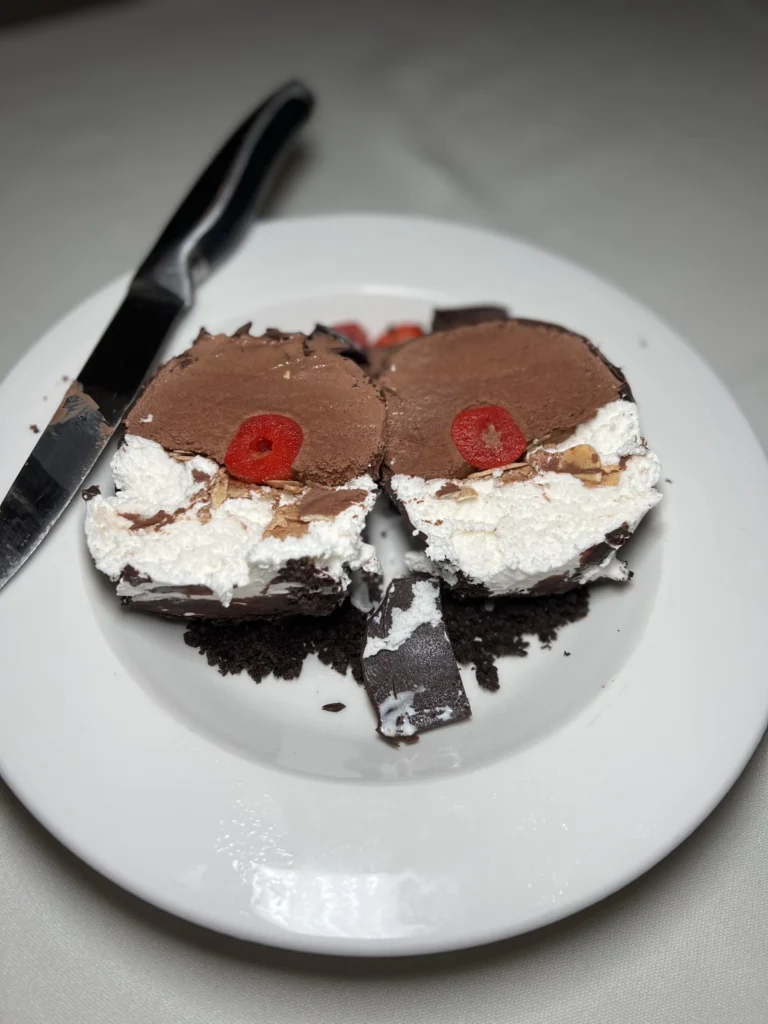
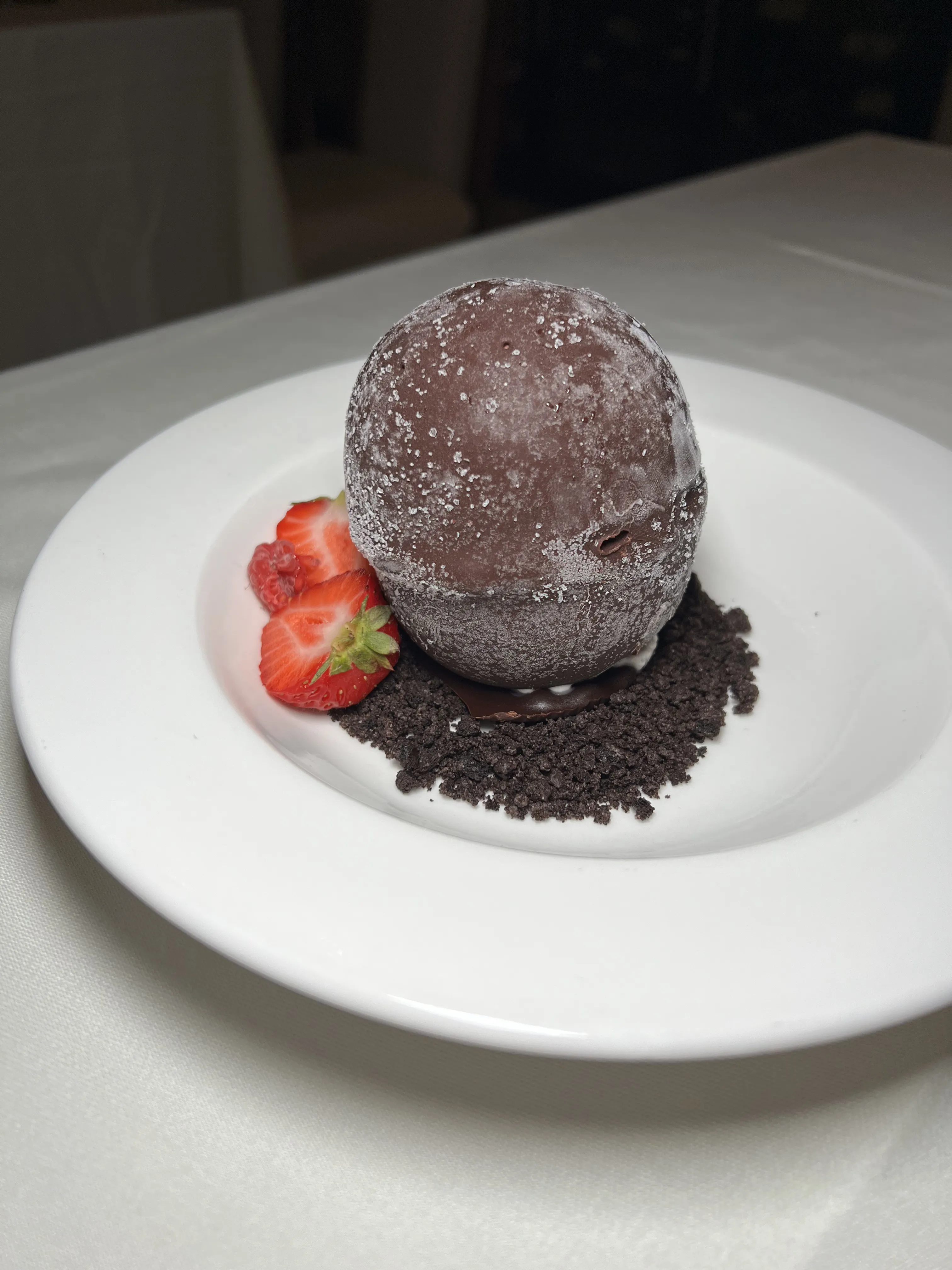
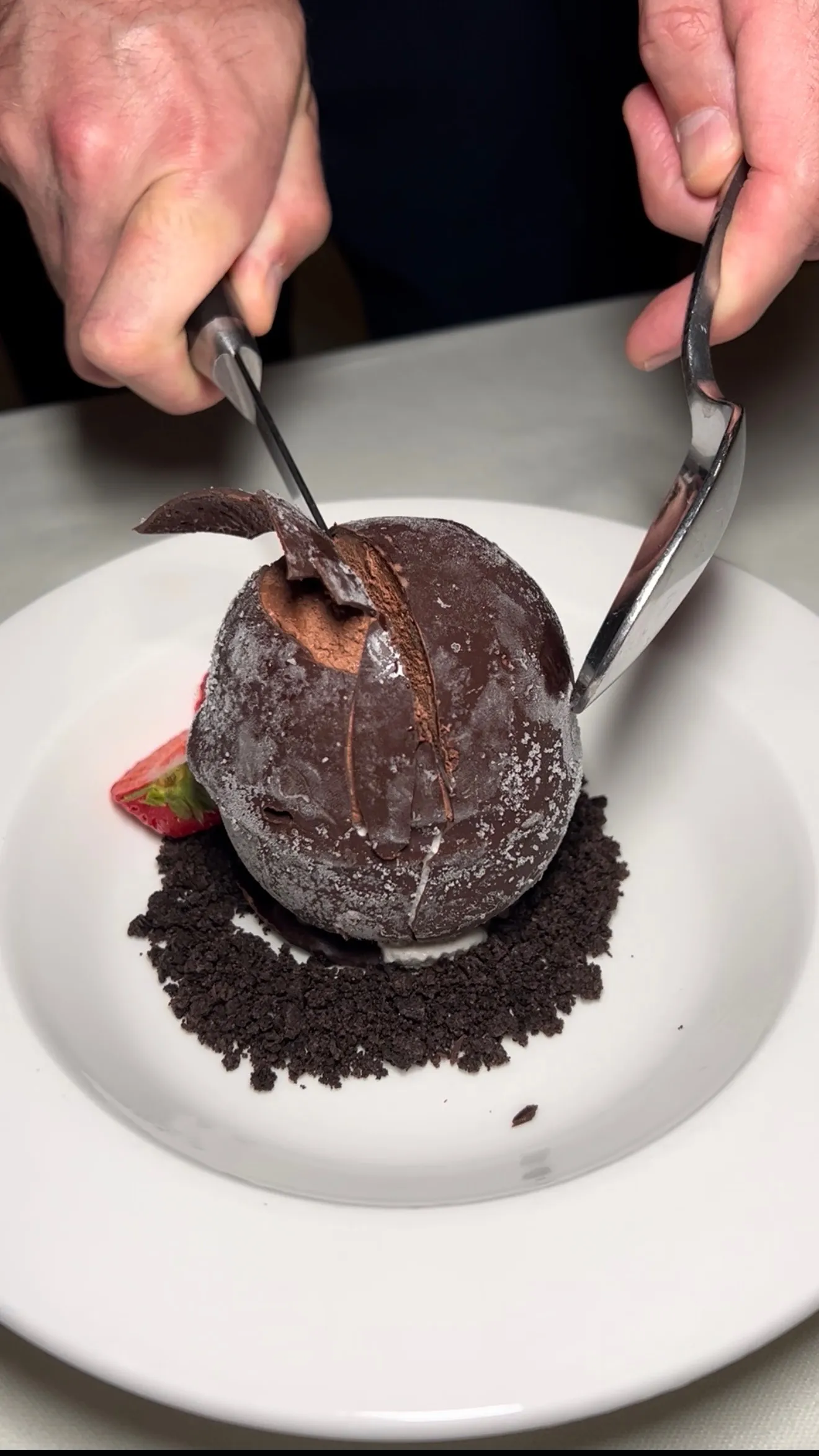
Tartufo is an Italian frozen dessert that originated in Pizzo, a small coastal town in Calabria. It translates to “truffle” because the finished dome resembles a black truffle pulled from the ground. Inside, you find layers of ice cream wrapped around a surprise center, typically a cherry or a pocket of melted chocolate. A hard chocolate shell encases the entire thing, and when you crack through it with a spoon or knife, the contrast between the snapping shell and the creamy interior is the whole experience.
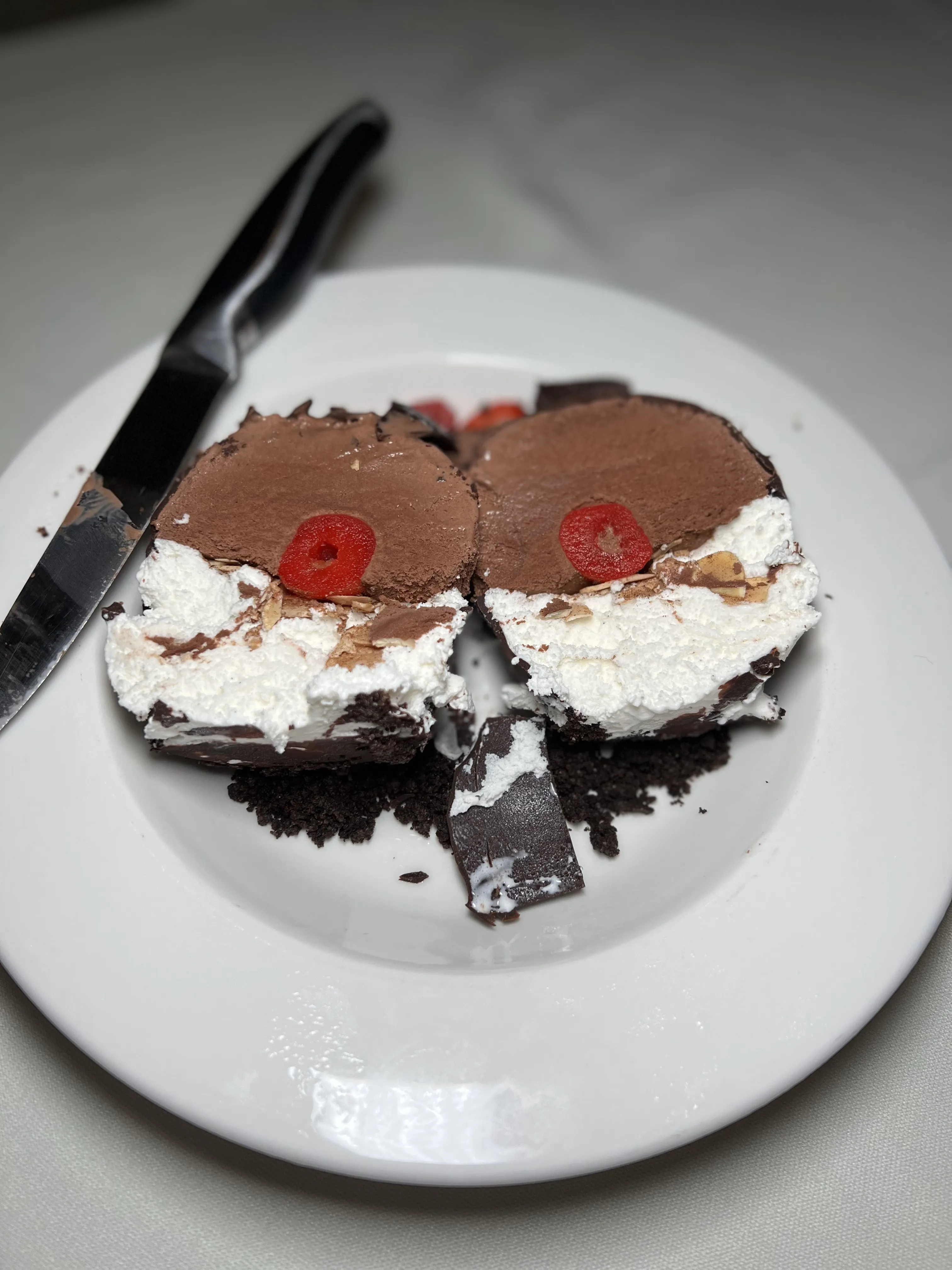
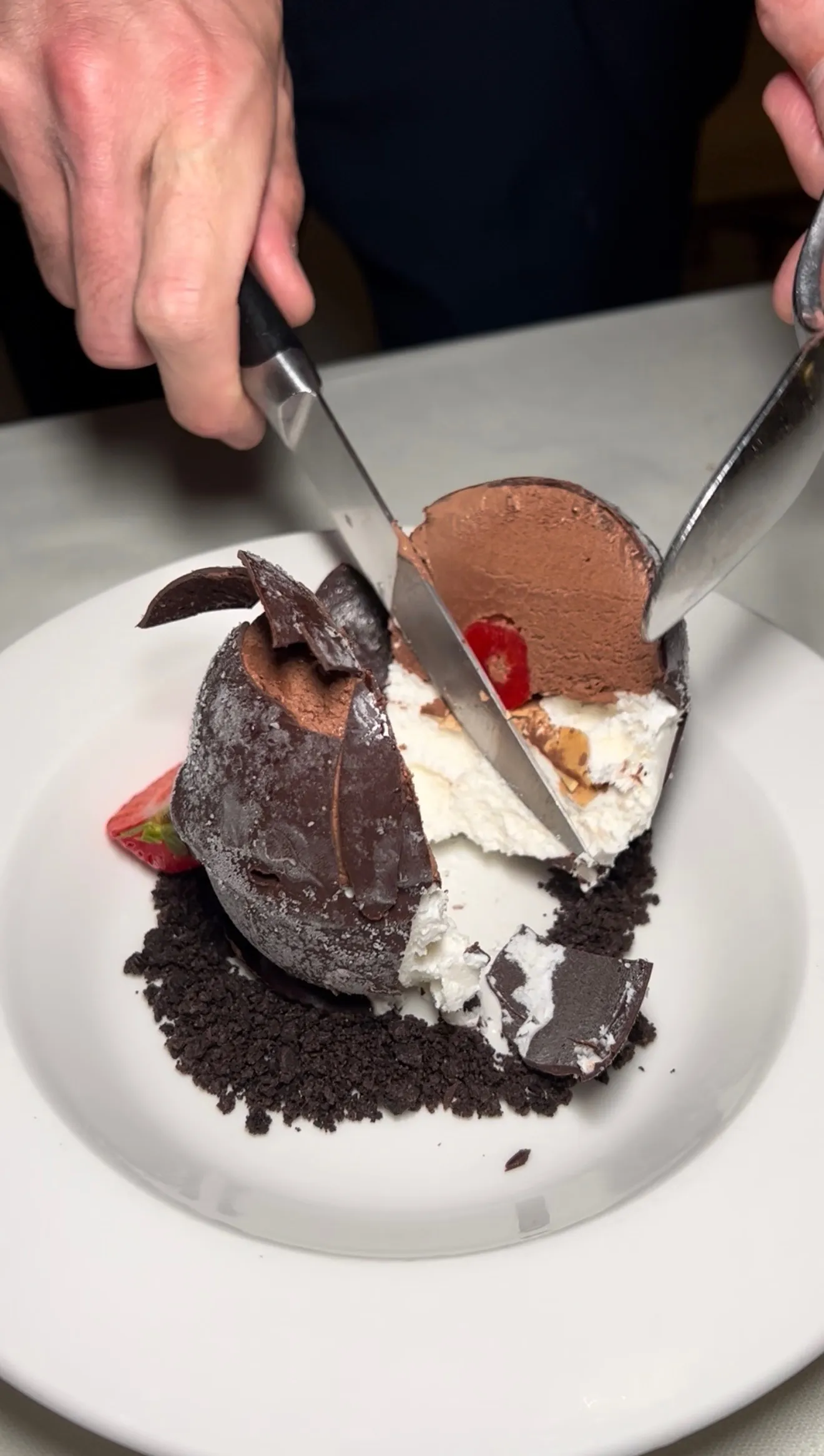
This version uses vanilla ice cream wrapped around an Amarena cherry and a core of chocolate fudge or Nutella. A crushed cookie base provides crunch underneath, and a coconut oil chocolate shell delivers that clean, glossy snap on the outside. Consequently, every bite hits four textures: crunchy shell, creamy ice cream, gooey chocolate center, and crumbly cookie base. It looks like a restaurant dessert but requires zero cooking and minimal equipment.
Amarena vs. Maraschino Cherries
Amarena cherries are the upgrade worth making. They come packed in a thick, dark syrup and have a rich, slightly bitter cherry flavor with real fruit intensity. Maraschino cherries from the grocery store are dyed, sweetened, and taste mostly like sugar water. In a dessert this simple, the quality of the cherry in the center matters because it is the surprise you discover when you cut through. Amarena cherries are available at Italian specialty stores, Whole Foods, and online. If you use maraschino, pat them dry first to prevent excess liquid from forming ice crystals inside the tartufo.
Coconut Oil Is What Creates the Snap
Why Melted Chocolate Alone Does Not Work
Pure melted chocolate poured over frozen ice cream creates a thick, chewy coating that is difficult to crack through cleanly. Adding coconut oil changes the physics entirely. Coconut oil is solid at room temperature and hardens almost instantly when it contacts a frozen surface. Mixed with melted chocolate at a ratio of roughly 1/4 cup oil to 1 1/2 cups chocolate, it produces a thin, glossy shell that snaps cleanly when you tap it with a spoon or press a knife through it. This is the same principle behind “magic shell” ice cream toppings, and it is the single most important technique in this recipe.
Getting the Temperature Right
Melt the semi-sweet chocolate and coconut oil together over a double boiler or in the microwave in 30-second intervals. Stir until completely smooth. Then let the mixture cool for 5 to 8 minutes before pouring it over the frozen ice cream balls. If the chocolate is too hot, it melts the outer layer of ice cream on contact, creating a messy, uneven coating. If it cools too much, it thickens and does not flow smoothly over the surface. You want it warm enough to pour freely but cool enough to hold your finger in for 3 seconds without discomfort. Additionally, work fast. Once the chocolate hits the frozen surface, it sets within 10 to 15 seconds.
Building Tartufo That Holds Its Shape
Shaping the Ice Cream Centers
Slightly soften the vanilla ice cream until it is scoopable but not melting. Take a portion (about 1/2 cup), flatten it in your palm, place one cherry and a small spoonful of fudge or Nutella in the center, then fold the ice cream around it and roll into a tight ball. Speed matters here. If the ice cream gets too soft, the balls lose their shape and the filling leaks out. Wearing food-safe gloves helps keep the surface smooth and prevents body heat from melting the ice cream too quickly.
Place each ball on a parchment-lined tray and freeze for at least 2 hours until rock solid. Do not skip this freeze time. Soft ice cream balls will deform when you pour the chocolate shell over them, and the coating will not set evenly. Furthermore, if the centers are not frozen solid, the chocolate shell cracks in the wrong places when you try to slice for presentation.
Cookie Crumb Base for Structure and Crunch
Crush chocolate cookies (Oreos with the filling removed work well) in a food processor or zip-top bag until you have fine crumbs. Mix with 2 tablespoons of melted butter to help the crumbs hold together. Press small mounds onto a parchment-lined tray and freeze until firm. This base serves two purposes: it provides a crunchy textural contrast to the creamy ice cream, and it gives the tartufo a flat surface to sit on when plated. Without the base, the dome rolls around the plate. Specifically, aim for a base slightly wider than the diameter of your ice cream ball so it sits securely.
Chocolate Shell Tartufo
Ingredients
Ice cream balls need at least 2 hours in the freezer before the chocolate shell goes on. Soft balls deform under the weight of the chocolate and the coating sets unevenly.
Coconut oil hardens instantly on contact with frozen surfaces. Mixed with chocolate at a 1:6 ratio, it creates a thin, glossy shell that cracks cleanly. Without it, you get a thick, chewy coating.
Food-safe gloves prevent body heat from melting the ice cream while you shape it. Balls stay rounder, smoother, and set faster in the freezer.
Step-by-Step Instructions
Step 1: Shape the Ice Cream Centers
Let the vanilla ice cream soften at room temperature for about 5 minutes until scoopable but not melting. Scoop roughly 1/2 cup of ice cream and flatten it in your palm (gloved hands recommended). Place one Amarena cherry and a small spoonful of chocolate fudge or Nutella in the center. Fold the ice cream around the filling and roll into a tight ball. Repeat to make 6 balls total.
Place the balls on a parchment-lined tray and freeze for at least 2 hours until rock solid. Do not rush this step. Soft centers will collapse when the chocolate shell is applied.
Step 2: Make the Cookie Crumb Base
Crush the chocolate cookies in a food processor or zip-top bag until you have fine crumbs. Mix with 2 tablespoons of melted butter. Press small mounds (about 2 tablespoons each) onto a parchment-lined tray, flattening them slightly to create a stable base for each tartufo to sit on. Freeze until firm, about 15 to 20 minutes.
Step 3: Make the Chocolate Shell
Melt 1 1/2 cups semi-sweet chocolate with 1/4 cup coconut oil in a double boiler or microwave (30-second intervals, stirring between each). Stir until completely smooth and glossy. Let the mixture cool for 5 to 8 minutes. It should be warm enough to pour freely but not hot enough to melt the ice cream on contact. Test by holding your finger in it for 3 seconds. If comfortable, it is ready.
Step 4: Coat the Tartufo
Remove the frozen ice cream balls from the freezer. Work one at a time. Place each ball on a wire rack set over a tray. Pour the chocolate shell mixture over the top, starting from the center and working outward so it coats the entire surface evenly. The chocolate hardens almost immediately on the frozen ice cream. Alternatively, dip each ball directly into the chocolate using a fork, turning to coat, then lift and let the excess drip off before placing on the rack.
Step 5: Assemble and Final Freeze
Place each coated tartufo on top of a frozen cookie crumb base. Dust lightly with cocoa powder or powdered sugar for presentation. Return to the freezer for 30 to 60 minutes to set everything completely. The tartufo can be made up to 3 days ahead and stored in the freezer, covered loosely with plastic wrap.
Step 6: Plate and Serve
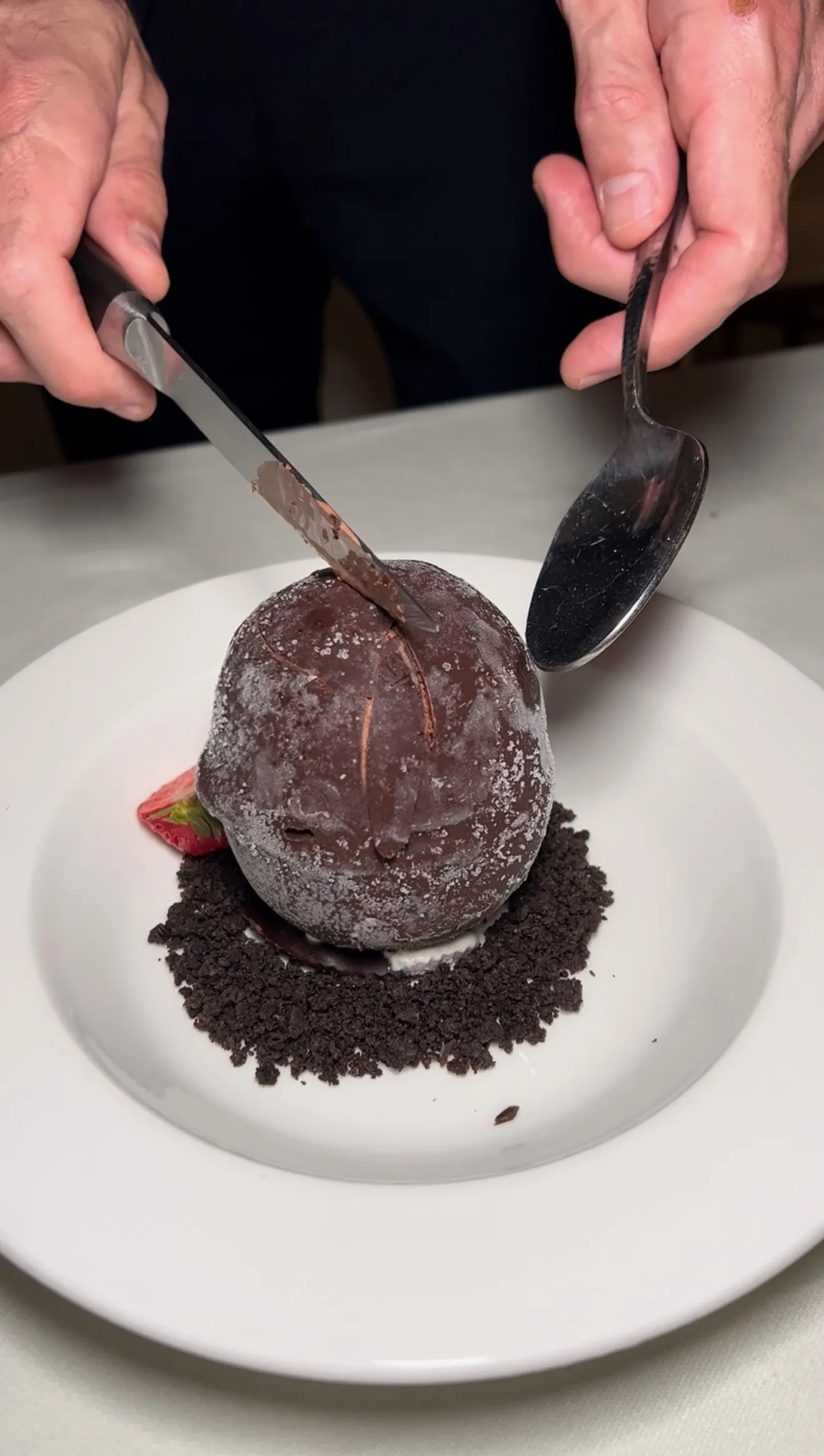
Place each tartufo on its crumb base in the center of a plate. Add a strawberry slice or fresh berry garnish alongside. Serve with a knife so guests can cut through the chocolate shell for the full reveal: glossy dark chocolate cracking open to expose creamy vanilla ice cream, a cherry, and a molten chocolate core. Serve immediately after pulling from the freezer.
Chocolate Shell Tartufo
Ingredients
Equipment
Method
- Soften ice cream slightly. Scoop about 1/2 cup, flatten in palm, place one cherry and a spoonful of fudge or Nutella in center. Wrap and roll into a tight ball. Repeat for 6 balls. Freeze at least 2 hours until solid.
- Crush cookies to fine crumbs. Mix with melted butter. Press small mounds onto a parchment-lined tray. Freeze 15-20 minutes until firm.
- Melt chocolate with coconut oil until smooth (double boiler or microwave in 30-second intervals). Let cool 5-8 minutes until warm but not hot.
- Place frozen ice cream balls on a wire rack over a tray. Pour chocolate shell over each, coating evenly. Shell hardens almost immediately. Alternatively, dip each ball using a fork.
- Place coated tartufo on cookie crumb bases. Dust with cocoa powder or powdered sugar. Freeze 30-60 minutes to set completely.
- Serve on individual plates with a strawberry or berry garnish. Cut through the shell at the table for the full reveal.
Notes
Chocolate Shell Tartufo — FAQ
Tartufo Questions
Tartufo is an Italian frozen dessert that originated in Pizzo, Calabria. It translates to “truffle” because it resembles a truffle in shape. A traditional tartufo consists of ice cream or gelato formed into a dome or ball around a hidden center (usually a cherry or chocolate), then coated in a chocolate shell, cocoa powder, or crushed nuts. Cracking through the coating to reveal the layers inside is part of the experience.
Coconut oil is solid at room temperature and hardens almost instantly when it contacts a frozen surface. Mixed with melted chocolate, it creates a thin shell that sets quickly into a glossy, brittle layer. Without coconut oil, pure chocolate produces a thick, chewy coating that bends rather than snaps. A ratio of roughly 1/4 cup coconut oil to 1 1/2 cups chocolate produces the ideal crack.
Yes. Vanilla is traditional and pairs well with the chocolate shell and cherry center, but chocolate, coffee, pistachio, hazelnut, and strawberry all work. Some versions use two flavors layered together inside the dome. If using gelato instead of ice cream, the texture will be slightly denser and more authentic to the Calabrian original. Avoid sorbets, as they do not freeze as firmly and can make the shell crack unevenly.
Amarena cherries are Italian sour cherries preserved in a thick, dark syrup. They taste like actual cherries with a rich, slightly bitter edge. Maraschino cherries from the grocery store are dyed bright red, bleached, and soaked in sugar syrup. They taste primarily sweet with minimal fruit flavor. Amarena is the better choice for tartufo because the cherry is a featured element, not a hidden afterthought.
Technique and Storage
Fully assembled tartufo keeps in the freezer for up to 3 days, loosely covered with plastic wrap. Beyond that, the chocolate shell can develop freezer burn and the ice cream may absorb off flavors. For the best presentation, apply the cocoa powder or powdered sugar dusting right before serving rather than in advance, as moisture from the freezer can cause it to dissolve and look dull.
Either the chocolate mixture cooled too much before pouring, causing it to set in a thick layer, or you used too little coconut oil. If it cooled too much, gently rewarm over a double boiler until pourable again. For a thinner shell, increase the coconut oil by 1 tablespoon. Pour in one smooth motion from the top of the dome outward, allowing the excess to drip off through the wire rack.
Yes. Nutella, dulce de leche, salted caramel sauce, and pistachio butter all work as alternative fillings. The center should be thick enough to hold its shape when frozen but soft enough to create that gooey surprise when you cut through. Avoid anything too liquid (like thin chocolate syrup), as it will not freeze into a cohesive center and may leak during shaping.