
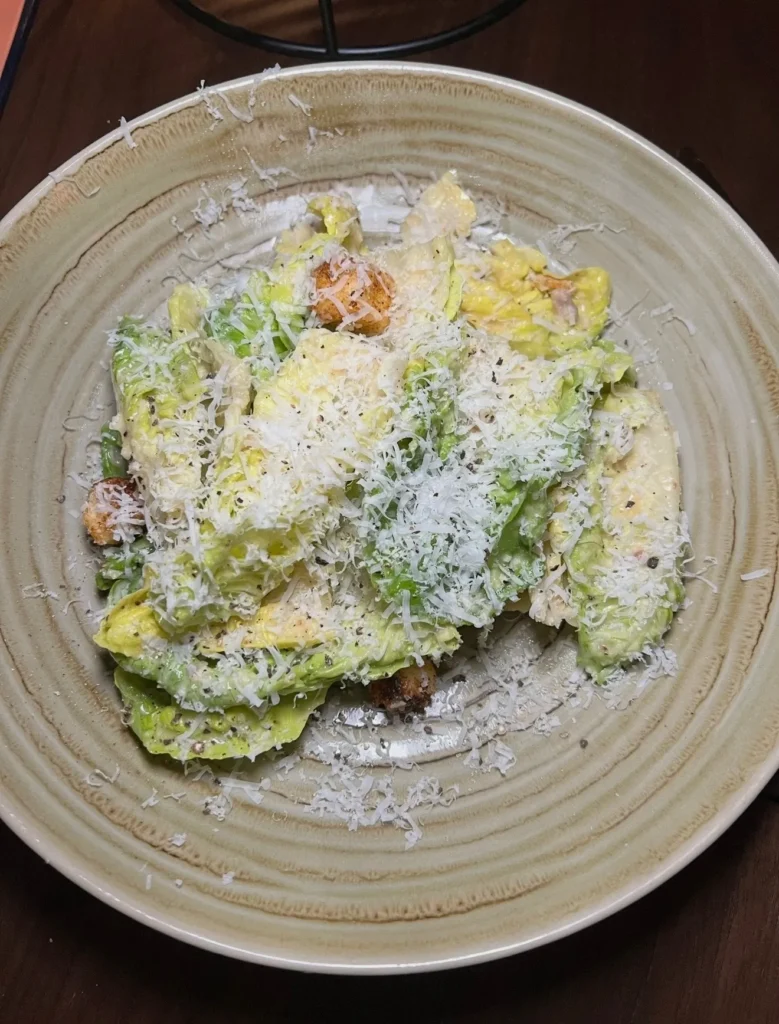
Classic caesar salad is the one salad that converts people who say they do not like salad. Cold, crisp romaine coated in a thick, garlicky dressing built on anchovy, egg yolk, lemon, and Parmesan. The dressing is the entire point, and the homemade version takes less than five minutes to whisk together. This recipe covers the traditional egg yolk method for maximum richness, plus a quick shortcut version using mayo for the same flavor with zero emulsification stress.
Why Homemade Caesar Dressing Changes Everything
Anchovy Is the Secret, Not the Enemy
The most common resistance to making caesar dressing at home is the anchovy. People assume it will taste fishy. It does not. When mashed into a paste with garlic and whisked into egg yolk and oil, anchovy dissolves completely. What it contributes is umami, that deep, savory baseline that makes restaurant caesar salad taste so much richer than anything from a bottle. Two fillets is all this recipe uses. You will not taste fish. You will taste depth. If you genuinely cannot use anchovy, substitute 1 teaspoon of Worcestershire sauce for a similar briny, fermented quality.
Egg Yolk vs. Mayo: Both Work, Here Is the Difference
Traditional caesar dressing uses a raw egg yolk as the emulsifier. The yolk binds the oil into a thick, creamy dressing that clings to every leaf. It produces the richest, most luxurious texture. However, if raw egg makes you uncomfortable, substitute 1 tablespoon of mayo. Mayo is already an emulsion of egg and oil, so the result is nearly identical. The only difference is that the mayo version is slightly thicker out of the bowl and lacks the faint richness that a fresh yolk provides. For a dinner party, use the yolk. For a Tuesday night, use the mayo. Both are excellent.
The Emulsion: Why You Drizzle, Not Pour
Emulsification is the process of forcing oil and water-based liquids (lemon juice, mustard, egg yolk) to combine into a stable, creamy mixture. If you dump all the oil in at once, the dressing breaks. It separates into a greasy, thin mess. Drizzling the oil slowly while whisking constantly allows the egg yolk and mustard to grab tiny droplets of oil and suspend them evenly. Start with a few drops at a time. Once the dressing begins to thicken, you can increase to a thin, steady stream. The entire 1/3 cup of oil should take about 60 to 90 seconds to incorporate. Additionally, Dijon mustard is not just for flavor. It contains natural emulsifiers that help stabilize the dressing and prevent it from splitting.
The Best Ingredients for Caesar Salad
Parmesan: Grated for the Dressing, Shaved for the Top
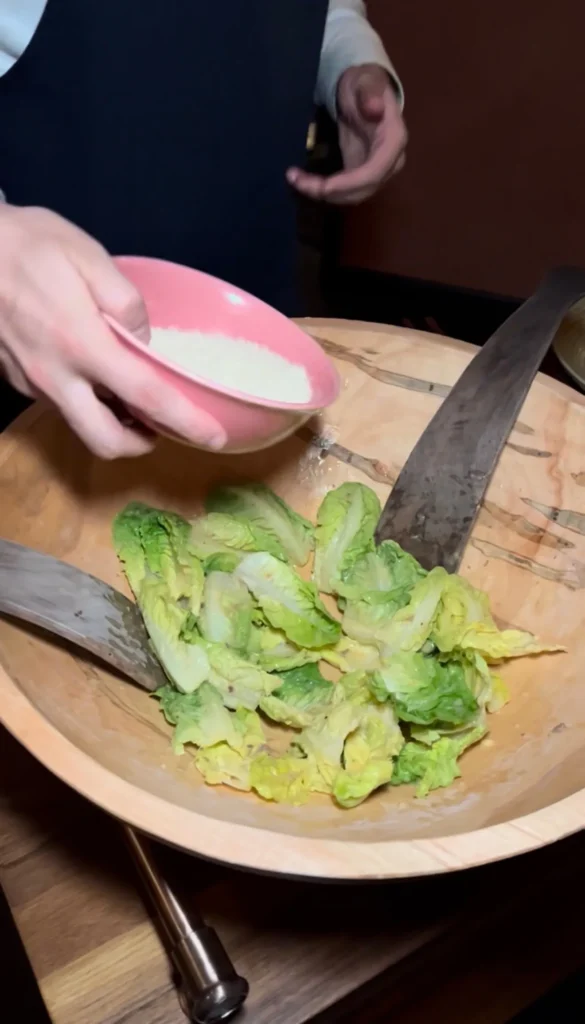
Use two forms of Parmesan in this salad. Finely grated Parmesan goes into the dressing, where it melts and thickens the mixture while adding salty, nutty depth. Shaved Parmesan goes on top of the assembled salad as a garnish. Parmigiano-Reggiano is the gold standard, but any quality hard Parmesan works. Pre-shredded bags from the dairy aisle contain cellulose powder to prevent clumping, which affects how the cheese melts into the dressing. Therefore, buy a wedge and grate it yourself. A microplane produces the finest grate for the dressing. A vegetable peeler creates the wide shavings for the top.
Romaine: The Only Lettuce That Works
Caesar salad requires romaine. Its sturdy, crisp ribs hold up to a thick dressing without wilting on contact. The water content provides a clean crunch that balances the richness of the coating. Other lettuces (iceberg, butter, mixed greens) either wilt too quickly or lack the structural integrity to carry the heavy dressing. Buy whole heads, not pre-chopped bags. Bag romaine has often been washed in chlorinated water and loses crispness faster. Wash and dry the leaves thoroughly. Any residual water on the leaves dilutes the dressing and prevents it from adhering. A salad spinner is the best tool for this.
Croutons: Homemade Takes Five Extra Minutes
Store-bought croutons are stale bread dust compressed into hard pebbles. Homemade croutons are cubes of good bread, tossed in olive oil and salt, toasted until golden and crunchy on the outside, slightly chewy in the center. Cut day-old bread (sourdough, ciabatta, or French bread) into 3/4-inch cubes. Toss with olive oil and a pinch of salt. Spread on a sheet pan and bake at 375°F for 10 to 12 minutes, tossing halfway. They should be golden brown and crisp on the edges but not rock hard. Cool completely before adding to the salad, or they will steam and soften.
How to Assemble Caesar Salad Like a Restaurant
Chill the Bowl
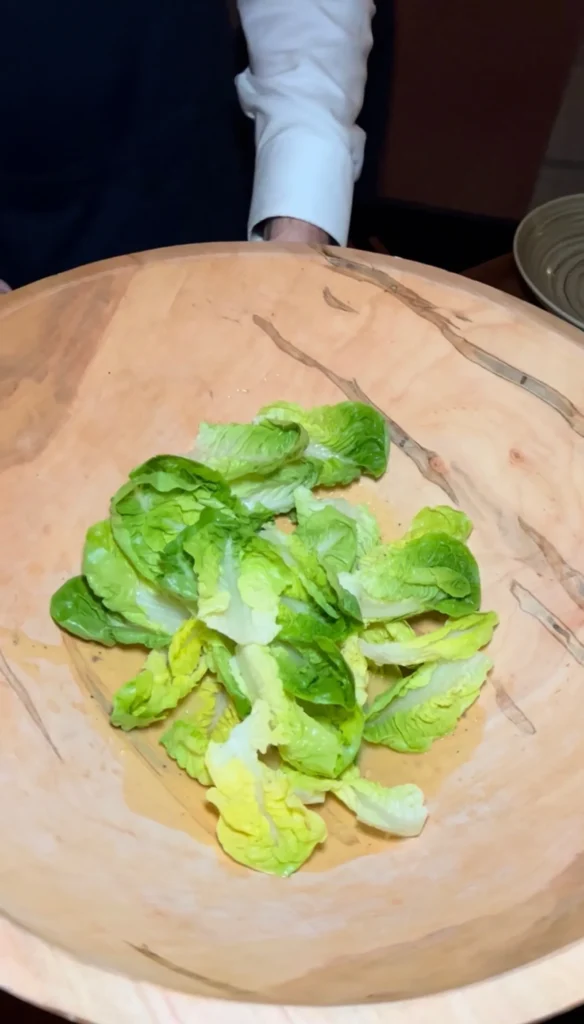
This is a small step that makes a significant difference. Place your serving bowl in the refrigerator for 15 to 20 minutes before assembling. A cold bowl keeps the romaine crisp and the dressing cool. Warm lettuce in a warm bowl starts to wilt the second the dressing touches it. Restaurant kitchens keep their salad bowls in walk-in coolers for this reason.
Dress Lightly, Then Adjust
The single most common mistake with caesar salad is overdressing. Start with about two-thirds of the dressing. Toss gently with tongs or your hands, lifting the lettuce from the bottom and folding it over. Every leaf should have a thin, even coat. If some leaves look bare, add a small amount more. The goal is a glistening coat, not a puddle at the bottom of the bowl. You can always add more dressing. You cannot remove it.
Build in Layers
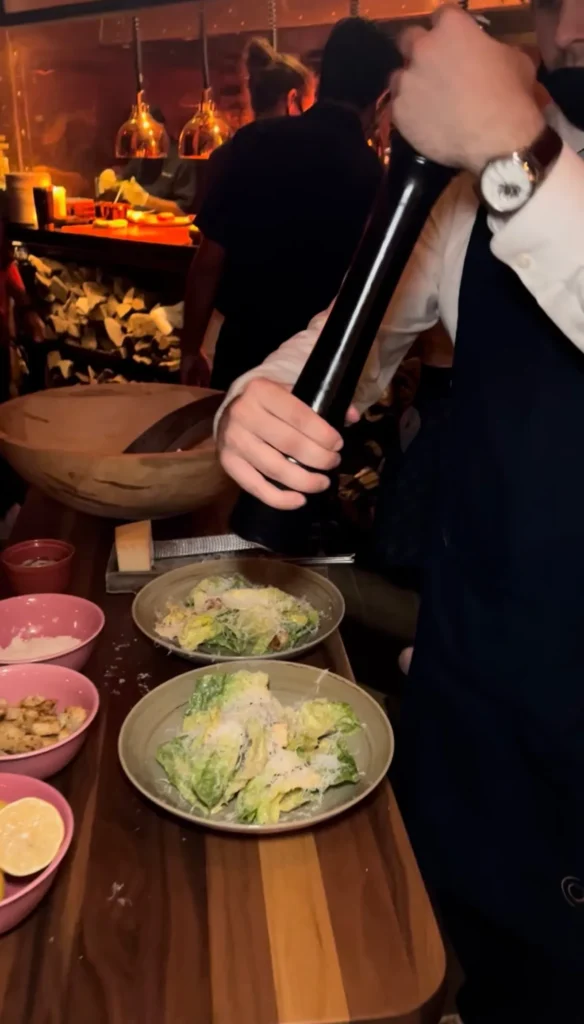
Add croutons and shaved Parmesan after dressing the lettuce, not before. Croutons tossed in dressing too early absorb moisture and lose their crunch. Place them on top. Finish with wide Parmesan shavings, a generous crack of black pepper, and an optional squeeze of fresh lemon over the top. The lemon at the end brightens everything and keeps the salad tasting clean.
Making It a Meal: Protein Add-Ons
Grilled Chicken
Season boneless, skinless chicken breast with salt, pepper, and a light coating of olive oil. Grill over medium-high heat for 6 to 7 minutes per side until the internal temperature reaches 165°F. Let it rest for 5 minutes, then slice against the grain into strips. Lay the slices across the top of the dressed salad. Chicken caesar salad is the most popular protein pairing for good reason. The mild, charred flavor does not compete with the bold dressing.
Shrimp or Steak
For shrimp, season with salt, pepper, and a squeeze of lemon. Sear in a hot skillet with olive oil for 2 minutes per side until pink and curled. For steak, a 6-ounce NY strip or flank steak seared to medium-rare and sliced thin turns this salad into a full dinner. In either case, add the protein on top of the assembled salad. Do not toss it in, or the heat will wilt the romaine.
Classic Caesar Salad
Ingredients
Bottled lemon juice tastes flat and metallic in a dressing this simple. Fresh lemons provide the bright acidity that balances the richness of the egg yolk and oil. One lemon yields about 2 tablespoons of juice.
It will not taste fishy. Anchovy dissolves into the dressing and provides the deep, savory backbone that makes caesar dressing taste like caesar dressing. Skip it, and the salad tastes like lemony Parmesan oil.
Place your serving bowl in the refrigerator for 15 to 20 minutes before assembling. A cold bowl keeps the romaine crisp and the dressing cool. This is the difference between a limp salad and one that tastes like it came from a steakhouse.
Step-by-Step Instructions For Classic Caesar Salad
Step 1: Make the Anchovy-Garlic Paste
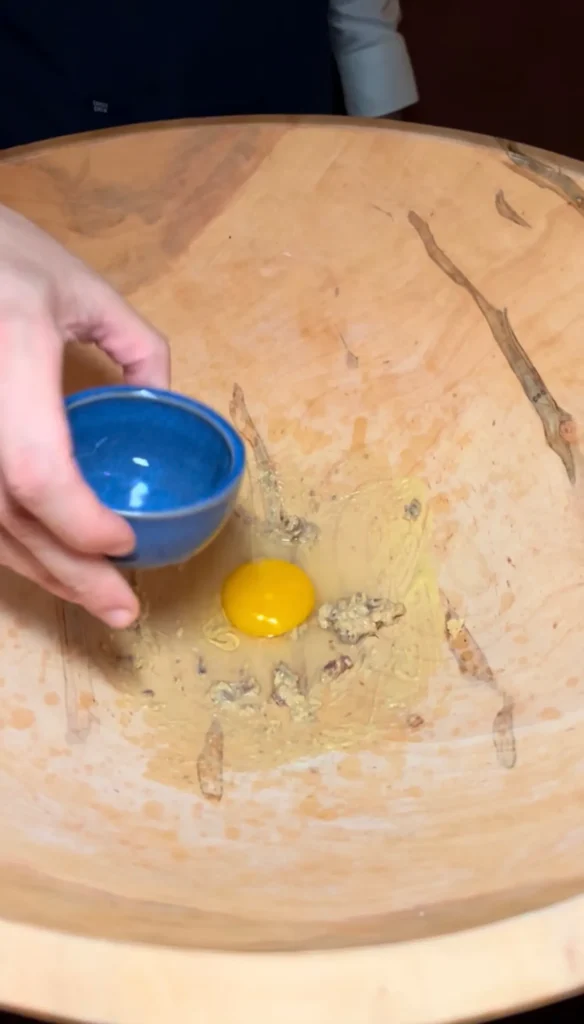
Finely mince 1 clove of garlic and 2 anchovy fillets on a cutting board. Sprinkle a small pinch of salt over both. Using the flat side of your knife, press and drag the garlic and anchovy across the board repeatedly until they form a smooth paste. The salt acts as an abrasive to help break everything down. This process takes about 2 minutes. The paste should be nearly liquid, with no visible chunks.
Alternatively, use 1 teaspoon of anchovy paste straight from the tube plus the minced garlic. This shortcut skips the mashing step entirely.
Step 2: Build the Dressing
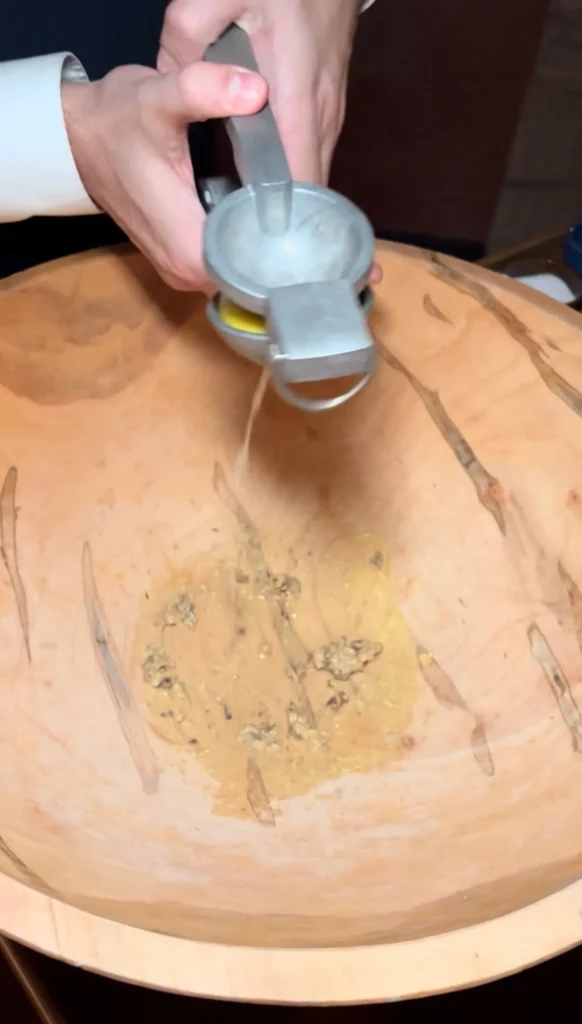
Scrape the paste into a medium mixing bowl. Add 1 egg yolk, 1 teaspoon Dijon mustard, and 2 tablespoons fresh lemon juice. Whisk until the mixture is smooth and slightly frothy, about 30 seconds.
Now drizzle in 1/3 cup olive oil in a very slow, thin stream while whisking constantly. Start with just a few drops at a time. As the mixture thickens, you can increase to a steady drizzle. Keep whisking until all the oil is incorporated and the dressing is thick and creamy.
Stir in 1/4 cup finely grated Parmesan cheese. Season with salt and freshly cracked black pepper. Taste and adjust the lemon or salt as needed.
Shortcut version: Skip the egg yolk. Use 1 tablespoon mayo as the base. Add the garlic (minced, no paste needed), anchovy paste, Dijon, lemon juice, and olive oil. Whisk or blend for 30 seconds. Stir in Parmesan.
Step 3: Prep and Dress the Salad
Wash 1 large head of romaine lettuce and dry it completely. Chop or tear into bite-sized pieces and place in a chilled bowl.
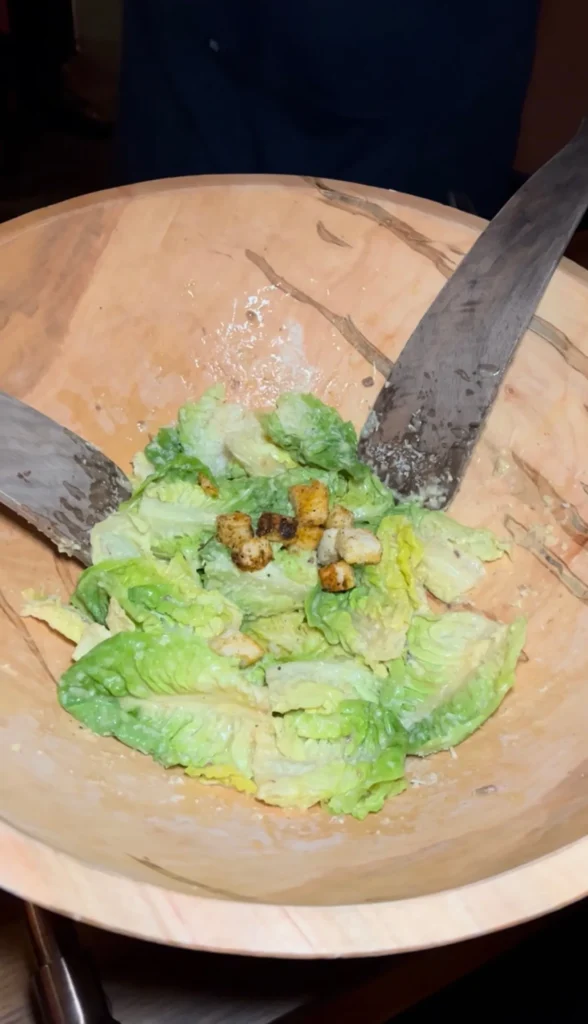
Add about two-thirds of the dressing and toss gently until every leaf is lightly coated. Add more dressing only if needed.
Step 4: Finish and Serve
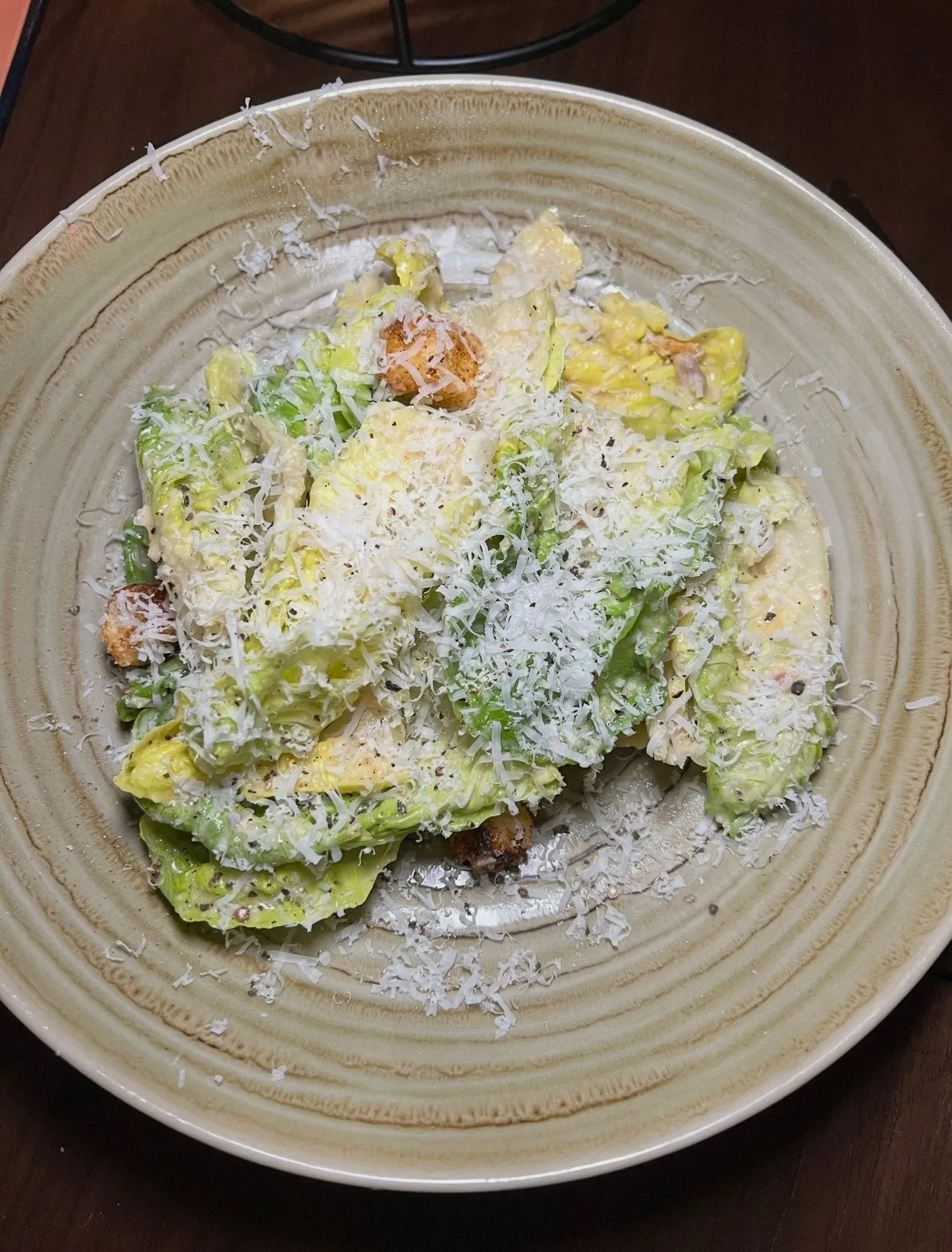
Top with 1/2 cup of croutons (homemade or store-bought) and extra shaved Parmesan. Crack fresh black pepper generously over the top. Serve immediately. Caesar salad does not hold well once dressed, so assemble right before eating.
Classic Caesar Salad
Ingredients
Equipment
Method
- Finely mince garlic and anchovy fillets together on a cutting board. Sprinkle with a pinch of salt and mash with the flat side of your knife until a smooth paste forms. Alternatively, use 1 tsp anchovy paste plus minced garlic.
- Scrape the paste into a medium bowl. Add egg yolk, Dijon mustard, and fresh lemon juice. Whisk until smooth and slightly frothy, about 30 seconds.
- Slowly drizzle in olive oil in a very thin stream while whisking constantly. Start with a few drops at a time, increasing to a steady drizzle as the dressing thickens. The full 1/3 cup should take 60 to 90 seconds to incorporate.
- Stir in grated Parmesan cheese. Season with salt and freshly cracked black pepper. Taste and adjust lemon juice or salt as needed.
- Place washed and dried romaine lettuce in a chilled salad bowl. Add about two-thirds of the dressing and toss gently until every leaf is lightly coated. Add more dressing only if needed.
- Top with croutons, shaved Parmesan, and a generous crack of fresh black pepper. Serve immediately.
Notes
Caesar Salad — FAQ
Caesar Salad Questions
The risk is low with fresh, high-quality eggs, but it is not zero. If you are concerned, use pasteurized eggs (sold at most grocery stores) or substitute 1 tablespoon of mayo for the egg yolk. Mayo is already a cooked emulsion of egg and oil, so the result is very similar in taste and texture.
You can, but the dressing will lack the deep savory quality that defines caesar salad. The best substitute is 1 teaspoon of Worcestershire sauce, which contains anchovy and provides a similar umami depth. Capers or a small amount of miso paste also work as alternatives.
The oil was added too quickly. To fix a broken dressing, start fresh with a new egg yolk in a clean bowl. Slowly drizzle the broken dressing into the new yolk while whisking constantly. The fresh yolk will re-emulsify the mixture. To prevent this, always add oil in a slow, thin stream and whisk continuously.
Store in an airtight jar in the refrigerator for 3 to 4 days if made with raw egg yolk, or up to 5 days if made with the mayo shortcut. Give it a good whisk before using, as the oil may separate slightly when cold. Bring to room temperature for a few minutes for easier pouring.
Assembly and Serving
Romaine is the standard for good reason. Its crisp ribs hold up to the thick dressing without wilting. Kale works as an alternative and is popular in kale caesar variations. Little Gem lettuce is a smaller, crunchier option. Avoid soft lettuces like butter or mixed greens, as they wilt almost immediately under the weight of the dressing.
You can prep the components ahead, but do not assemble until serving. Make the dressing up to 4 days ahead. Wash, dry, and store the romaine in a bag with a paper towel for up to 3 days. Bake croutons 1 to 2 days ahead and store at room temperature. Once dressed, the salad wilts within 15 to 20 minutes.
Grilled chicken is the classic pairing. Seared shrimp and sliced steak (flank or NY strip) also work well. Place the protein on top of the dressed salad rather than tossing it in. The residual heat from hot protein will wilt the romaine if mixed through.
Caesar salad was created in Tijuana, Mexico in the 1920s by Italian-American restaurateur Caesar Cardini. It was not invented in Italy or the United States. The original version used whole romaine leaves meant to be eaten with the hands, and the dressing was prepared tableside.