Adana kebab is Turkey’s gold standard for grilled meat. Hand-chopped lamb mixed with lamb tail fat, seasoned with Aleppo pepper and salt, pressed onto wide flat skewers, and grilled over charcoal until the outside is deeply charred and the inside is still juicy. No onion, no garlic, no filler. Just meat, fat, fire, and the right technique. This recipe covers the authentic method: how to mince and knead until the mixture binds, why the fat ratio is non-negotiable, how to shape on flat skewers, and how to grill over coals for that smoky, rendered crust.
Jump to Recipe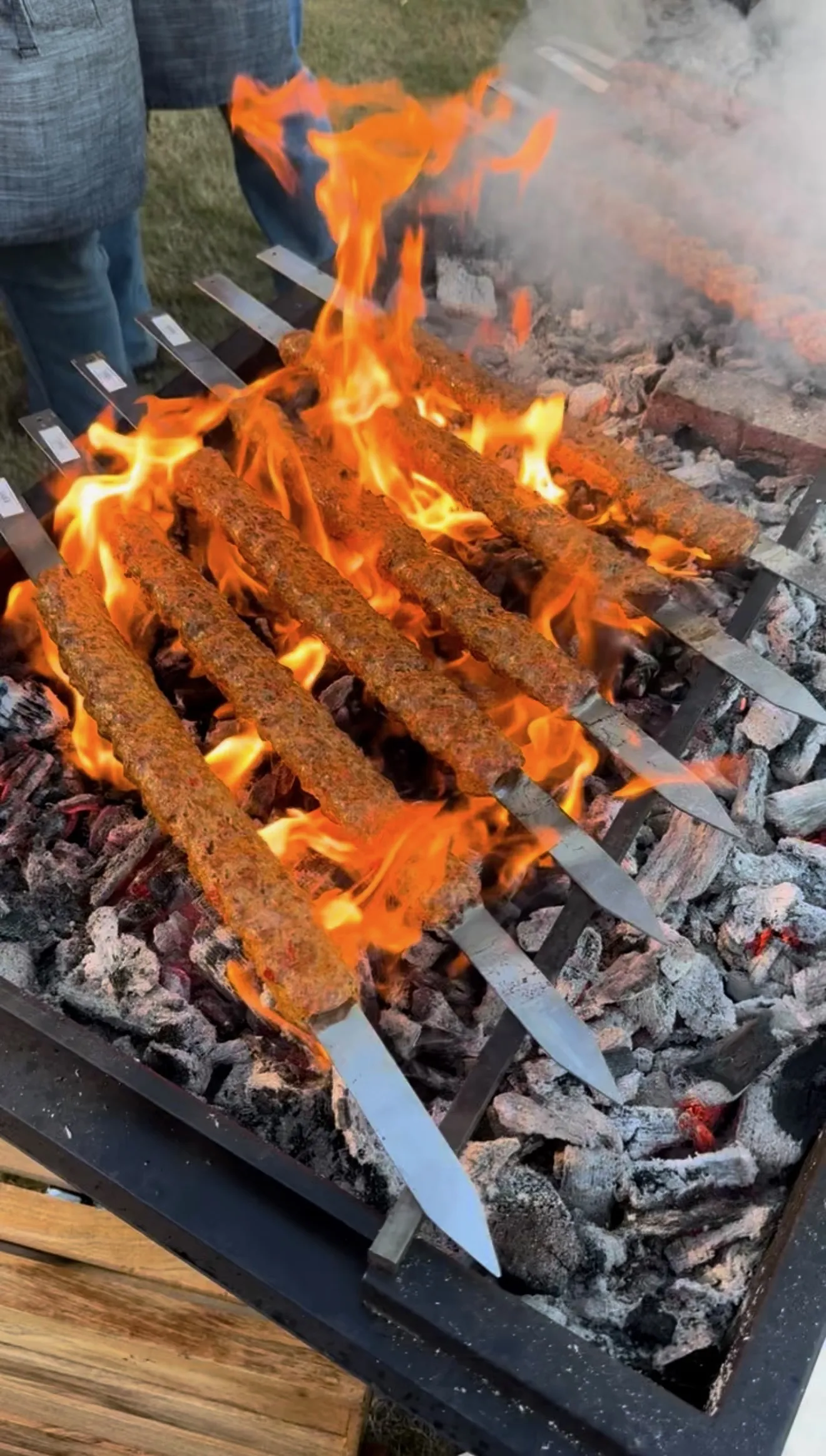
What Makes Adana Kebab Different from Every Other Kebab
Named After a City, Defined by Technique
Adana kebab takes its name from the city of Adana in southern Turkey, one of the country’s grilling capitals. Unlike generic ground meat kebabs, Adana has strict rules. Authentic versions use hand-chopped lamb (not machine-ground), mixed with lamb tail fat for moisture, seasoned with Aleppo pepper and minimal spices, then pressed onto wide flat metal skewers and grilled over charcoal. No onion, no garlic, no cumin in the traditional recipe. Just meat, fat, salt, and pepper. Everything else is considered a deviation.
What separates a great Adana kebab from a mediocre one comes down to three variables: the fat ratio, the kneading time, and the heat source. Get those right and you end up with a skewer that is deeply charred on the outside, juicy and slightly pink in the center, with rendered fat that bastes the meat from within. Consequently, Adana kebab tastes smokier, richer, and more intensely meaty than kebabs made from pre-ground supermarket lamb.
Lamb Tail Fat: Not Optional
Lamb tail fat (kuyruk yagi) is the traditional fat used in Adana kebab. It has a higher melting point than regular body fat, which means it renders slowly on the grill instead of dripping out immediately. This slow render keeps the kebab juicy throughout the entire cooking time. Without it, the meat dries out before the exterior develops a proper char. Use 150 to 200 grams of fat per kilogram of meat, roughly a 15 to 20 percent ratio. If you cannot find lamb tail fat, beef fat from the butcher works as a substitute. Do not use olive oil or butter as replacements. They behave differently under high heat and will not provide the same internal moisture.
Why Kneading Is More Important Than Seasoning
8 to 10 Minutes of Aggressive Kneading
Kneading the meat mixture for 8 to 10 minutes by hand is what makes Adana kebab hold onto the skewer without falling off into the coals. Salt extracts myosin protein from the meat fibers during kneading. Myosin is the same protein that makes sausage bind together. As you knead, the mixture transitions from loose, crumbly ground meat to a tacky, cohesive mass that sticks to your hands and to the skewer. If the meat falls off when you hold the skewer vertically, you have not kneaded enough.
Do not use a food processor or stand mixer for this step. Machine mixing overworks the fat and creates a pasty, homogenous texture. Hand kneading preserves small pockets of fat throughout the meat, which melt during grilling and create those bursts of juiciness in each bite. Additionally, keep the meat cold during kneading. Warm meat becomes soft and difficult to shape. If your hands are warming the mixture, return it to the refrigerator for 10 minutes before continuing.
Resting Overnight Changes Everything
After kneading, cover the mixture and refrigerate for at least 2 hours, though overnight is significantly better. Resting allows the salt to fully penetrate the meat, the fat to firm up, and the spices to bloom. Cold, rested meat is also much easier to shape onto skewers. Warm or freshly mixed meat slides and sags. If you try to skip the rest and go straight to shaping, you will struggle to get the meat to stay on the skewer, especially over the high heat of charcoal.
Shaping and Grilling Over Charcoal
Wide Flat Skewers Are Essential
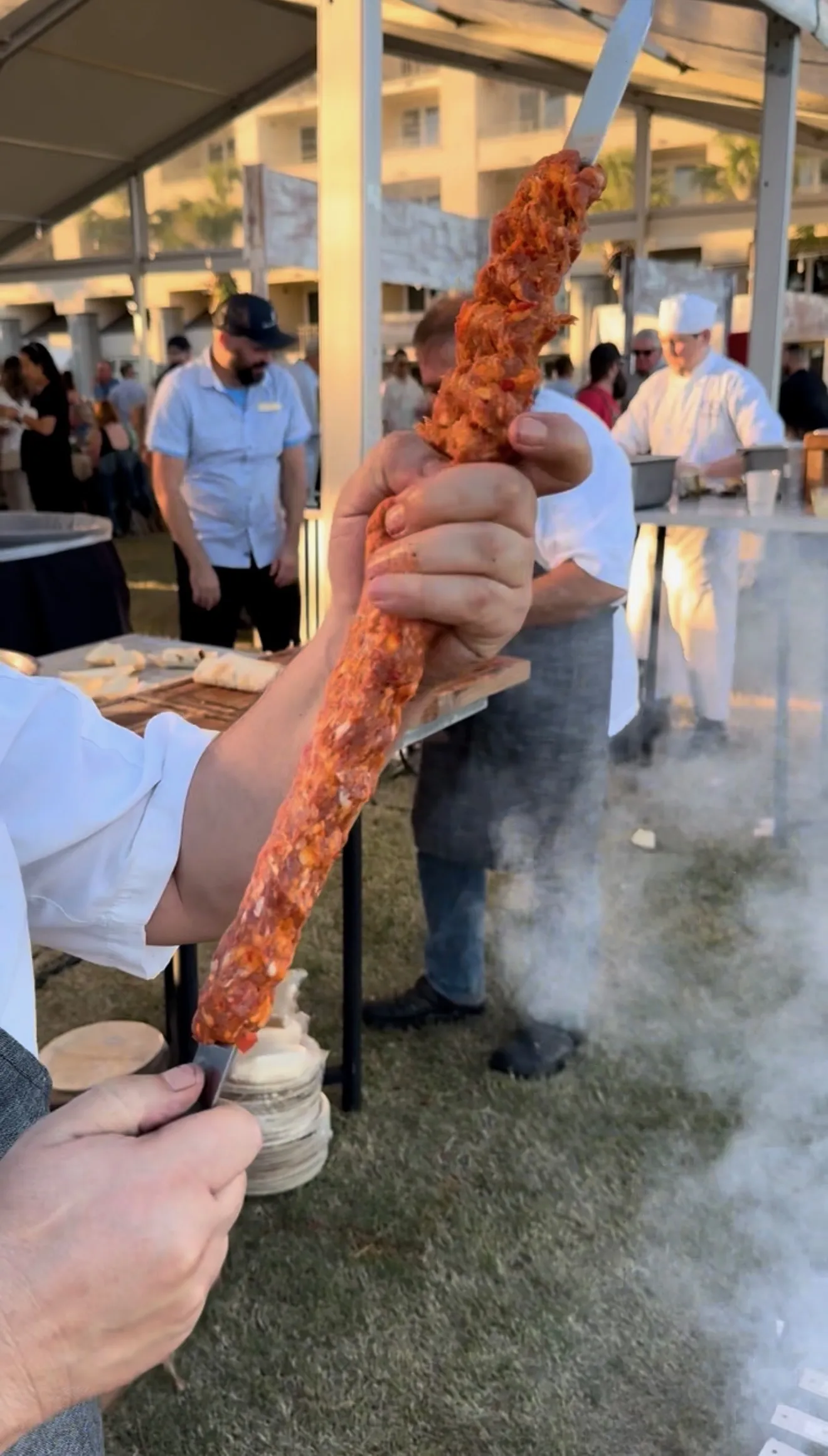
Round bamboo or thin metal skewers will not work for Adana kebab. You need wide, flat metal skewers (at least 1/2 inch wide) that give the meat a surface to grip. Wet your hands before shaping to prevent sticking. Take a handful of the cold meat mixture and press it around the skewer, spreading it evenly to about 1 to 1.5 centimeters thick. Create slight ridges with your fingertips along the surface. These ridges increase surface area, which means more char and more flavor development during grilling.
Charcoal Heat, Not Direct Flame
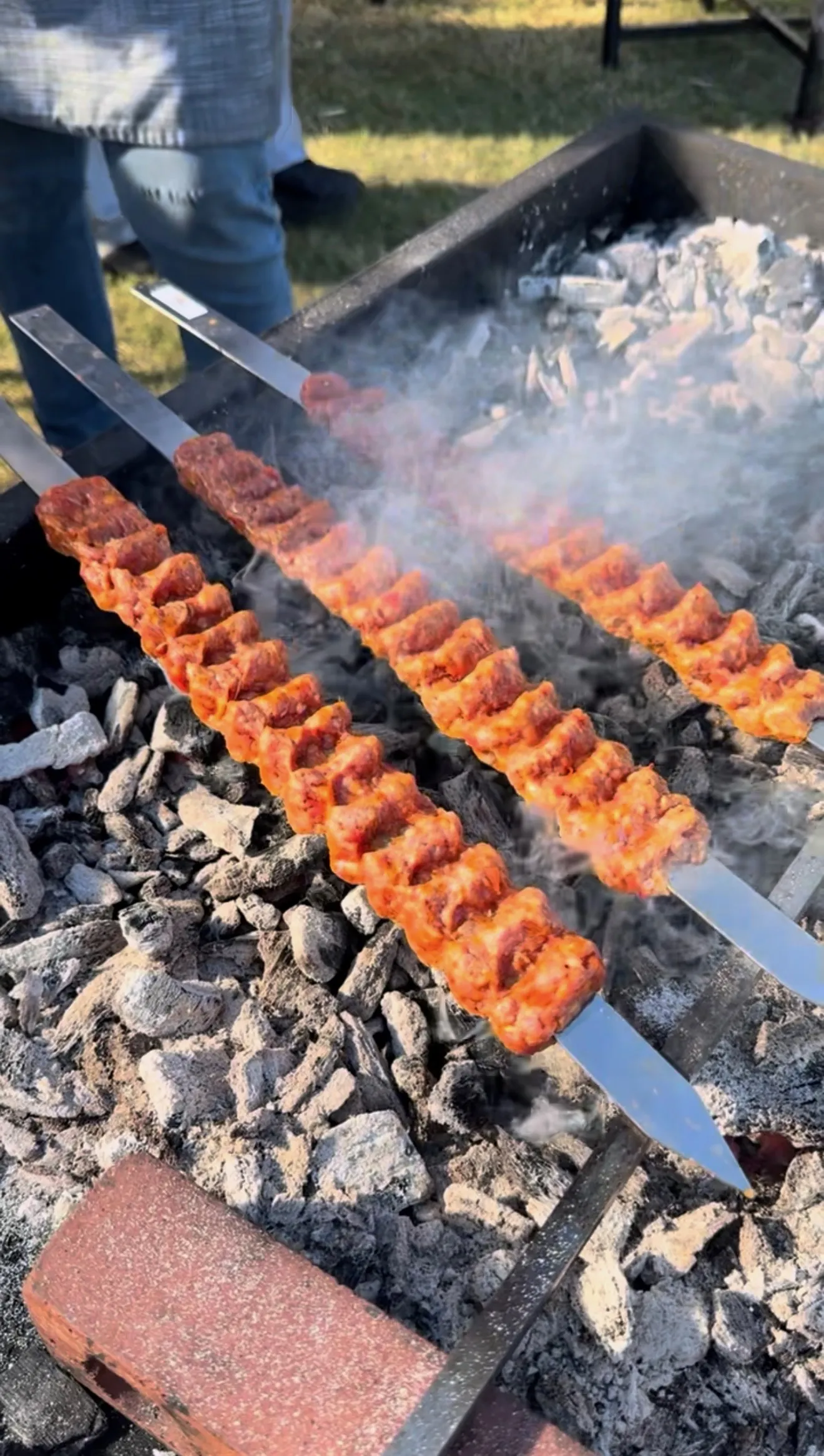
Position the skewers over hot coals, not over active flames. Flames cause flare-ups that burn the exterior while leaving the interior raw. Hot coals provide consistent, radiant heat that chars the surface evenly while cooking the center through. Turn the skewers every 30 to 60 seconds for even browning. Total cook time runs 8 to 12 minutes depending on thickness and coal temperature. You want deep charred edges, a slightly rendered fat crust, and a juicy center that is cooked through but not dry.
If using a gas grill, preheat to the highest setting and cook with the lid open. A cast iron grill pan on the stovetop over maximum heat works as a last resort, though you lose the charcoal smoke that is part of the authentic flavor profile. Regardless of the heat source, the kebab should spend no more than 12 minutes total over heat. Anything longer dries the meat out past the point of recovery.
How to Serve Adana Kebab Like in Turkey
Classic Turkish Plating
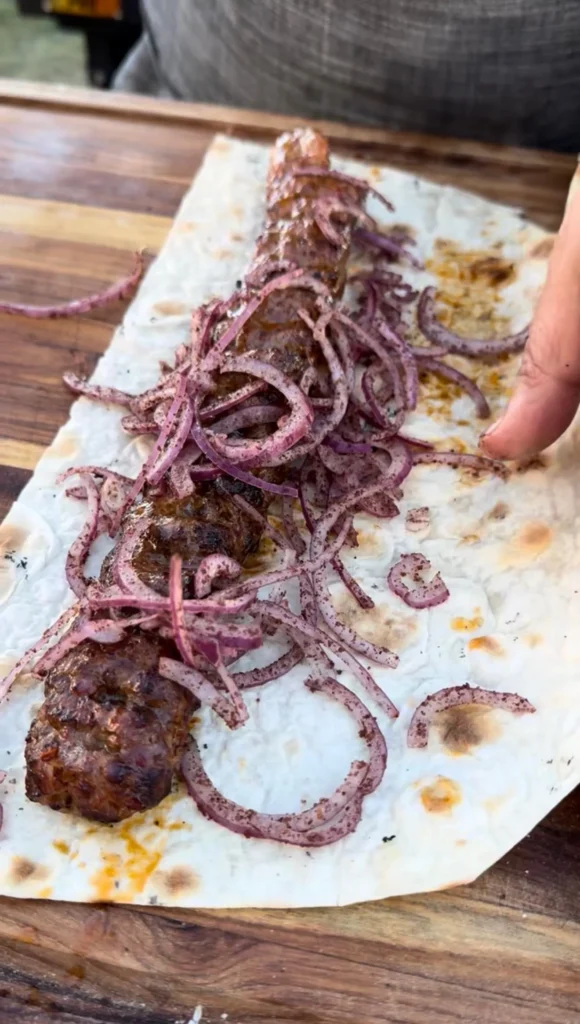
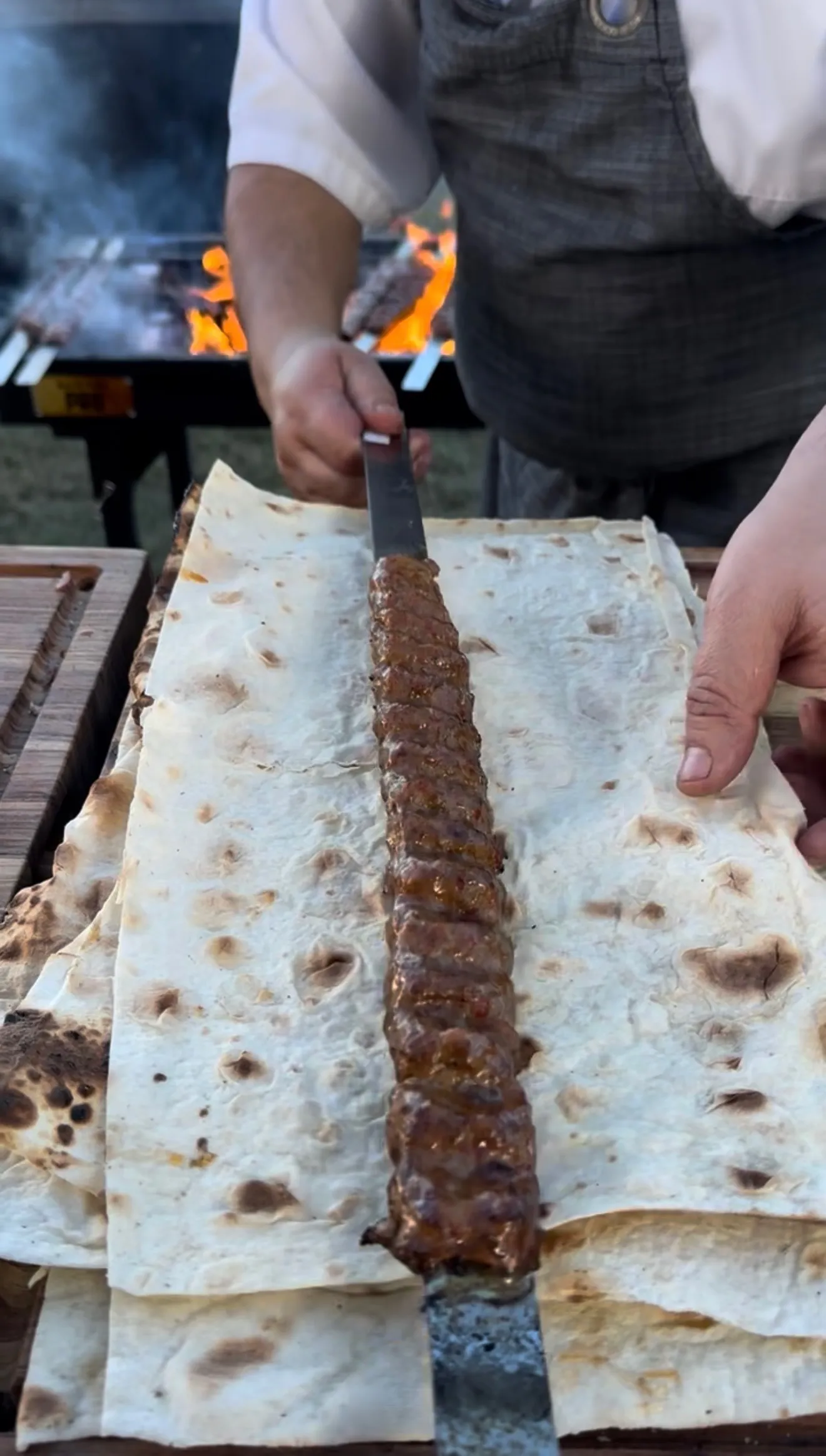
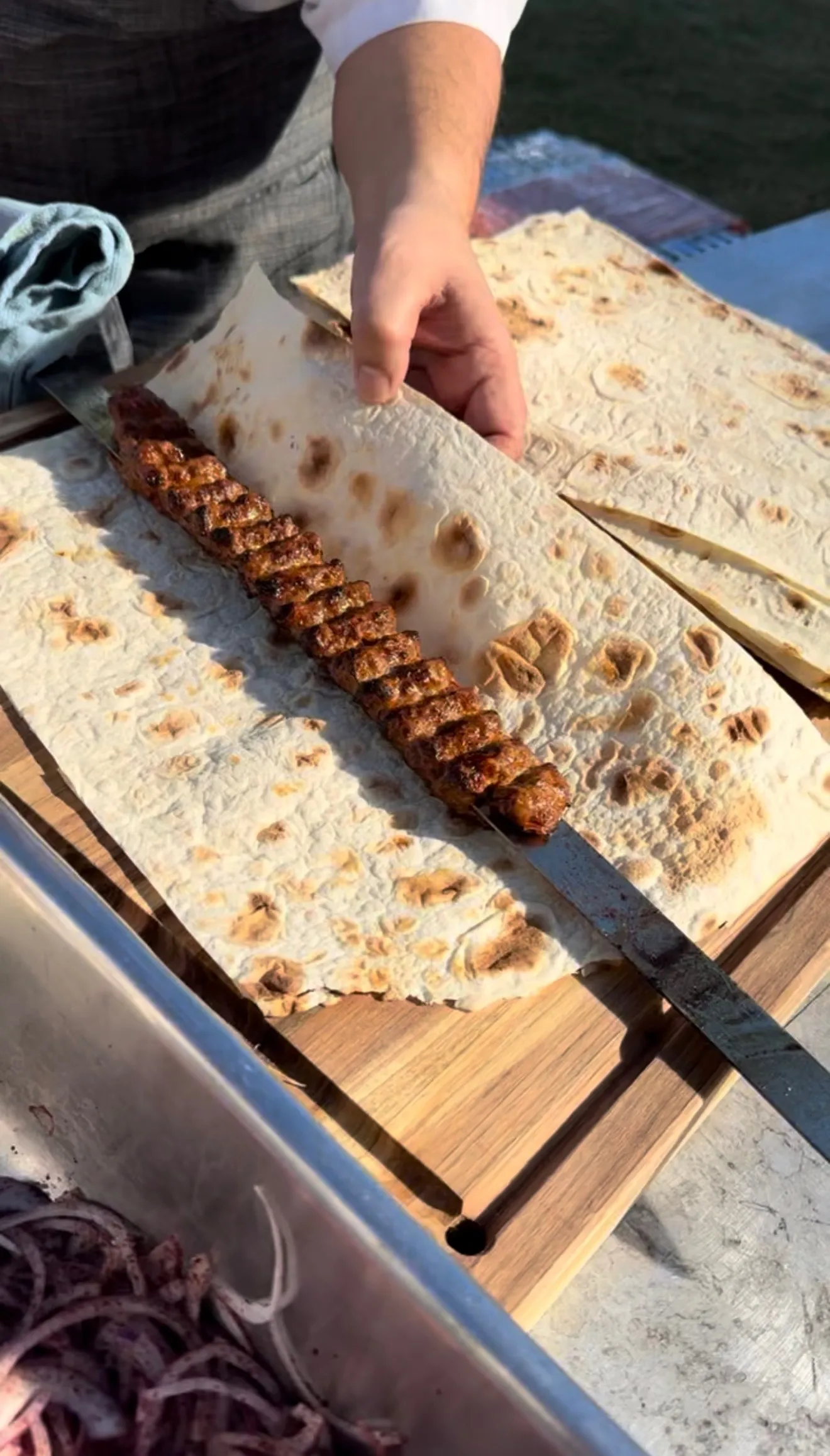
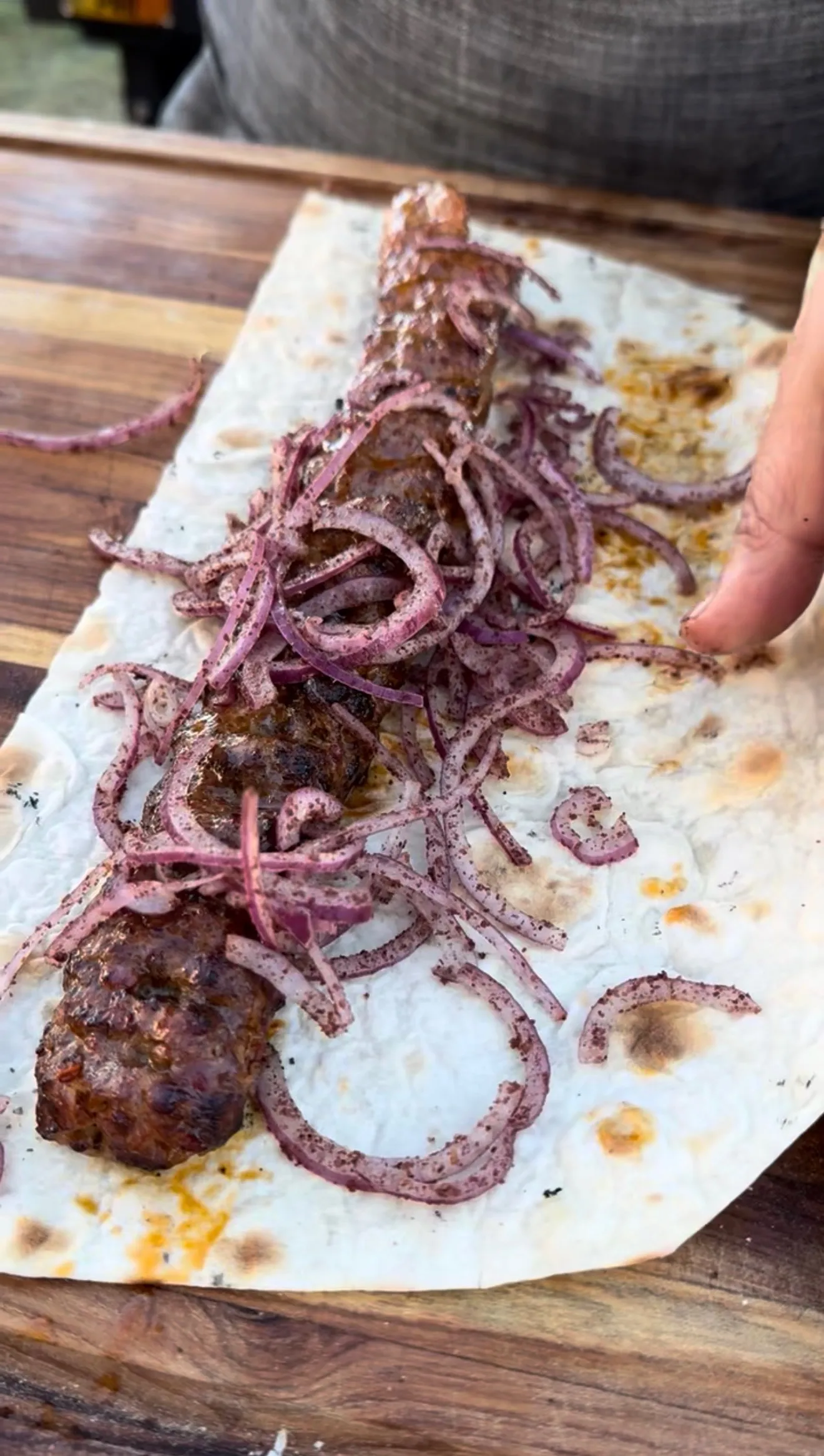
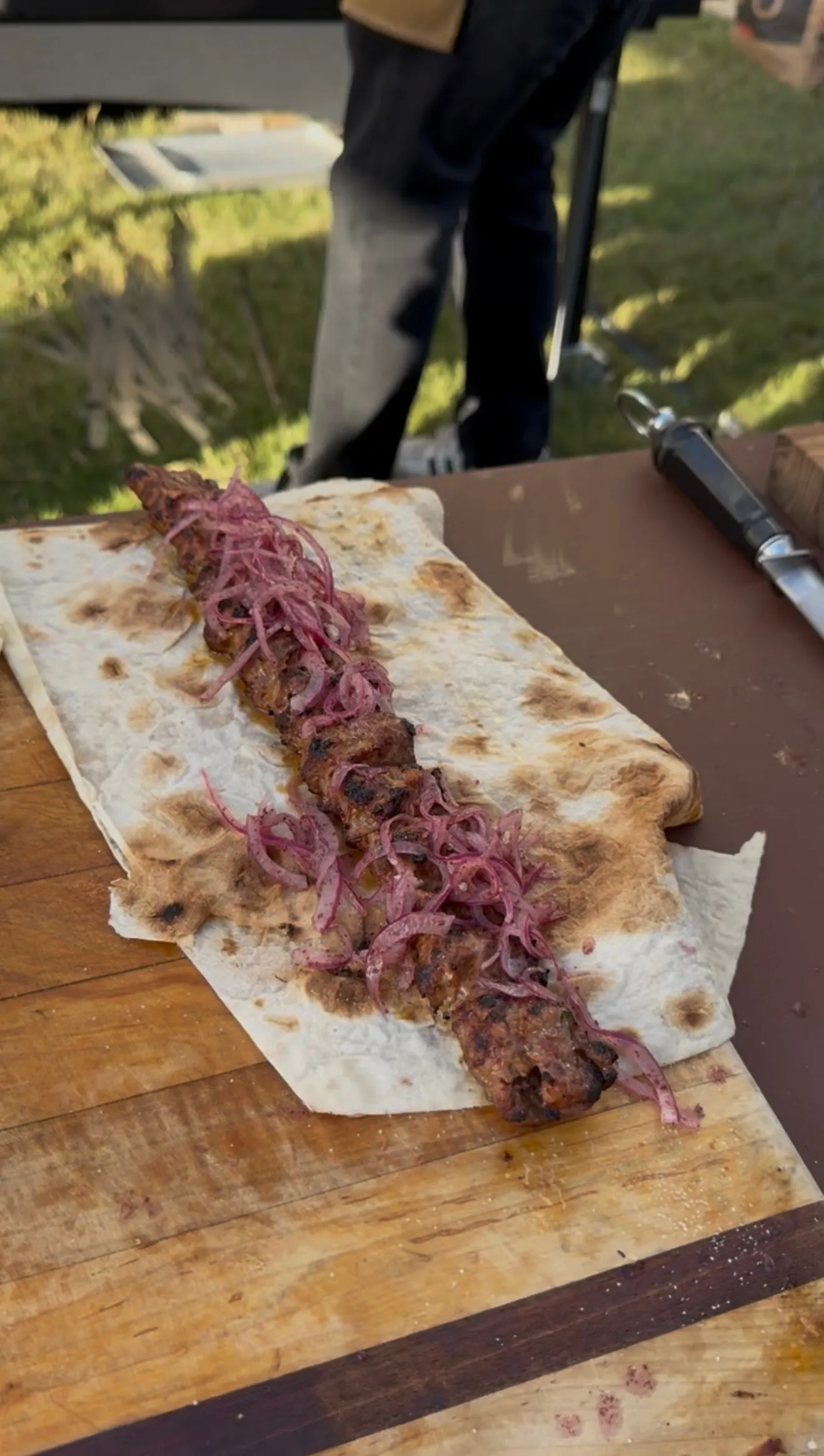
In Turkey, Adana kebab is served on a sheet of lavash or thin flatbread that absorbs the rendered fat and juices from the skewer. Grilled tomatoes and green peppers sit alongside, charred and blistered from the same coals. Sliced red onion tossed with sumac and chopped parsley provides a sharp, tangy contrast to the rich meat. A side of yogurt or a glass of ayran (salted yogurt drink) rounds out the meal. This is not a dish that needs complex sides. The kebab is the centerpiece, and everything around it exists to balance its richness.
Slide the kebab off the skewer directly onto the flatbread. Wrap the bread around the meat, add onions and grilled vegetables, and eat with your hands. Alternatively, plate it open-faced with the kebab laid across the bread and the sides arranged around it. Either way, serve immediately. Adana kebab loses moisture rapidly once it comes off the grill. Within 5 minutes, the exterior firms up and the interior dries. Speed from grill to plate to mouth is part of the tradition.
Authentic Adana Kebab
Ingredients
15 to 20 percent fat by weight. Too lean and the kebab dries out on the grill before the exterior chars. Lamb tail fat renders slowly and bastes the meat from inside.
8 to 10 minutes of aggressive hand kneading. Salt extracts myosin protein that binds the meat together. If the mixture falls off a vertical skewer, keep kneading.
Keep the mixture refrigerated until the moment you shape it. Cold meat holds its form on the skewer. Warm meat sags and slides off over the grill.
Step-by-Step Instructions
Step 1: Mince the Meat and Fat
Hand-chop the lamb shoulder and lamb tail fat with a sharp knife or cleaver until finely minced. You want a slightly coarse texture with visible fat pieces, not a smooth paste. If hand-chopping is not practical, ask your butcher to coarsely grind the meat once through a large die. Do not use pre-ground supermarket lamb, as it is typically too fine and too lean for Adana kebab.
Step 2: Season and Knead
Add fine salt, Aleppo pepper, chili flakes, sweet paprika, and black pepper to the minced meat. Knead aggressively by hand for 8 to 10 minutes. Push the meat against the bowl with your palms, fold it over, and repeat. After 8 minutes, the mixture should feel tacky and cohesive. It should stick to your hands and hold together when pressed. If it is still crumbly, knead for 2 more minutes.
Step 3: Rest the Mixture
Cover the bowl tightly with plastic wrap and refrigerate for at least 2 hours. Overnight resting produces the best results. During this time, the salt finishes extracting protein, the fat firms up for easier shaping, and the Aleppo pepper blooms into the meat. Do not skip this step if you want the kebab to hold on the skewer.
Step 4: Shape onto Skewers
Remove the meat from the refrigerator. Wet your hands with cold water. Take a handful of the mixture (about 150 grams) and press it around a wide flat metal skewer. Spread evenly, shaping it about 1 to 1.5 centimeters thick and roughly 15 centimeters long. Create slight ridges along the surface with your fingertips. These ridges catch more heat and develop more char. Hold the skewer vertically to confirm the meat stays in place before moving to the grill.
Step 5: Grill Over Hot Charcoal
Position the skewers over hot charcoal embers, not open flames. Turn every 30 to 60 seconds for even charring on all sides. Total cook time is 8 to 12 minutes. Look for deep charred edges, a rendered fat crust on the surface, and a juicy center. Remove from the grill the moment the exterior is dark and the meat feels firm but springs back slightly when pressed.
Step 6: Serve Immediately
Slide the kebab off the skewer directly onto lavash or warm flatbread. Arrange grilled tomatoes and green peppers alongside. Top with sliced red onion tossed in sumac and chopped parsley. Serve with yogurt or ayran on the side. Eat immediately while the meat is still juicy and the char is still crackling.
Authentic Adana Kebab
Ingredients
Equipment
Method
- Hand-chop lamb and fat finely with a knife or cleaver. Texture should be slightly coarse but sticky, not a smooth paste.
- Add salt, Aleppo pepper, chili flakes, paprika, and black pepper. Knead aggressively by hand for 8-10 minutes until the mixture is tacky and binds together.
- Cover and refrigerate 2-12 hours (overnight is best). This lets fat firm up and spices integrate.
- Wet hands. Press cold meat mixture onto wide flat metal skewers, about 1-1.5 cm thick. Create slight finger ridges along the surface for more char.
- Grill over hot charcoal (not open flames). Turn every 30-60 seconds. Cook 8-12 minutes total until deeply charred with a juicy center.
- Slide kebab onto lavash or flatbread. Serve with grilled tomatoes, peppers, sumac onions, and yogurt. Eat immediately.
Notes
Adana Kebab — FAQ
Adana Kebab Questions
Adana kebab uses hand-chopped lamb mixed with lamb tail fat, seasoned minimally with Aleppo pepper and salt, then pressed onto wide flat skewers and grilled over charcoal. Regular ground meat kebabs typically use machine-ground meat with onion, garlic, and heavier spice blends. Adana’s coarser texture, higher fat content, and minimal seasoning produce a smokier, more intensely meaty result.
Insufficient kneading is the most common cause. You need 8 to 10 minutes of aggressive hand kneading to extract myosin protein, which acts as a natural binder. Other causes include meat that is too warm (keep it refrigerated until shaping), too lean (15 to 20 percent fat is required), or skewers that are too narrow. Wide, flat metal skewers give the meat a surface to grip.
Lamb tail fat (kuyruk yagi) is fat from the tail of specific sheep breeds, common in Middle Eastern and Central Asian cooking. It has a higher melting point than regular body fat, which means it renders slowly and keeps the kebab juicy throughout grilling. Find it at Middle Eastern, Turkish, or halal butcher shops. Beef fat from your butcher works as a substitute if lamb tail fat is unavailable.
Yes, but the flavor will differ. Gas grill: preheat to maximum and cook with the lid open. You get the char but miss the smoke. Oven broiler: place skewers on a rack over a baking sheet, 6 inches from the broiler, turning every 2 minutes for 10 to 12 minutes total. Cast iron grill pan: works for the sear but produces no smoke at all. Charcoal smoke is a defining part of Adana kebab’s flavor.
Ingredients and Serving
Aleppo pepper (pul biber) is a coarsely ground, oily Turkish chili with moderate heat and a slightly fruity, earthy flavor. It is available at Middle Eastern grocery stores and online. For substitution, mix sweet paprika with a pinch of cayenne at a 4:1 ratio. Korean gochugaru flakes also work as an approximation. Standard crushed red pepper is too hot and lacks the complexity.
A mix of 70% lamb and 30% beef chuck is common and works well. All-beef is possible but produces a different flavor profile. Lamb provides the distinctive gamey richness that defines Adana kebab. If using all beef, choose well-marbled chuck with at least 20% fat content. Lean ground beef from the supermarket will produce dry, crumbly kebabs regardless of how long you knead.
Slide the kebab off the skewer onto lavash or thin flatbread. Wrap the bread around the meat with sliced red onion dressed in sumac and chopped parsley. Eat with your hands alongside grilled tomatoes, charred green peppers, and yogurt or ayran (a salted yogurt drink). Everything is served immediately while the kebab is still steaming.