
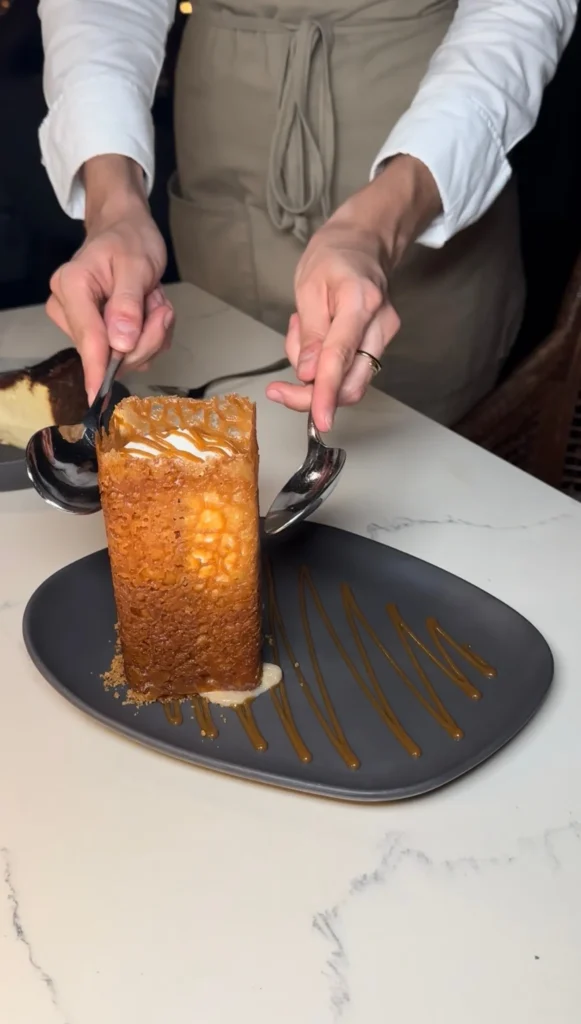
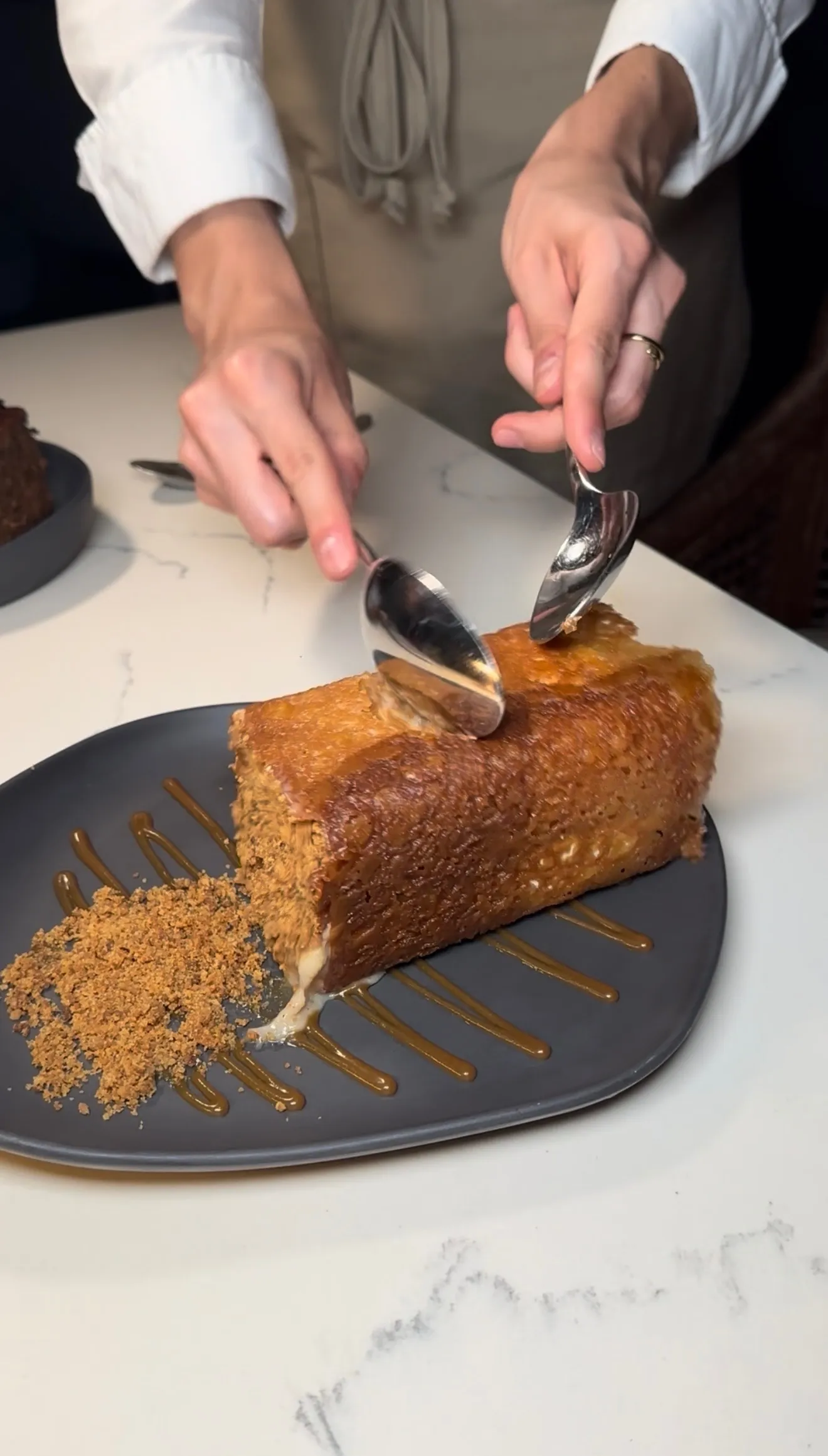
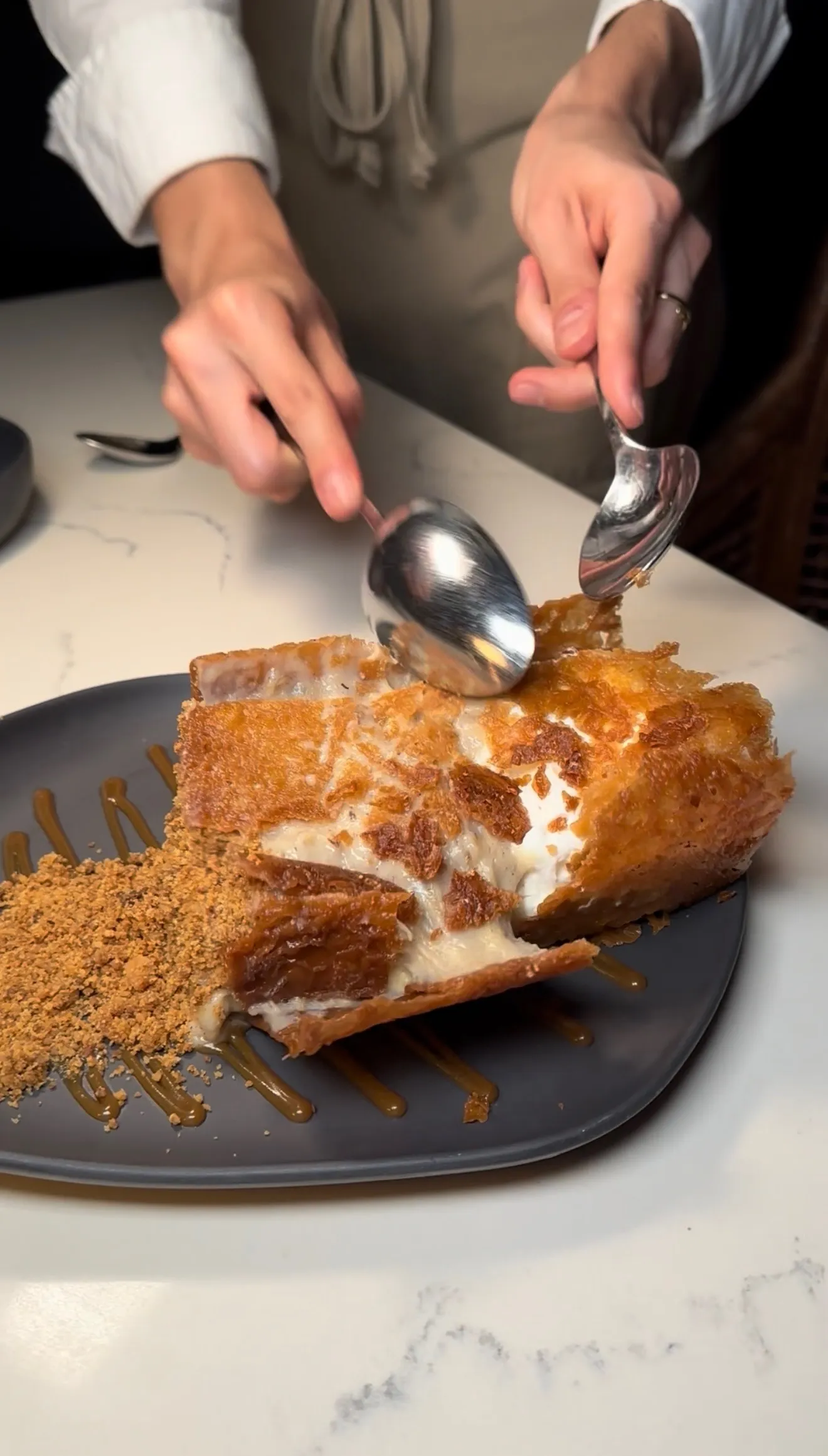
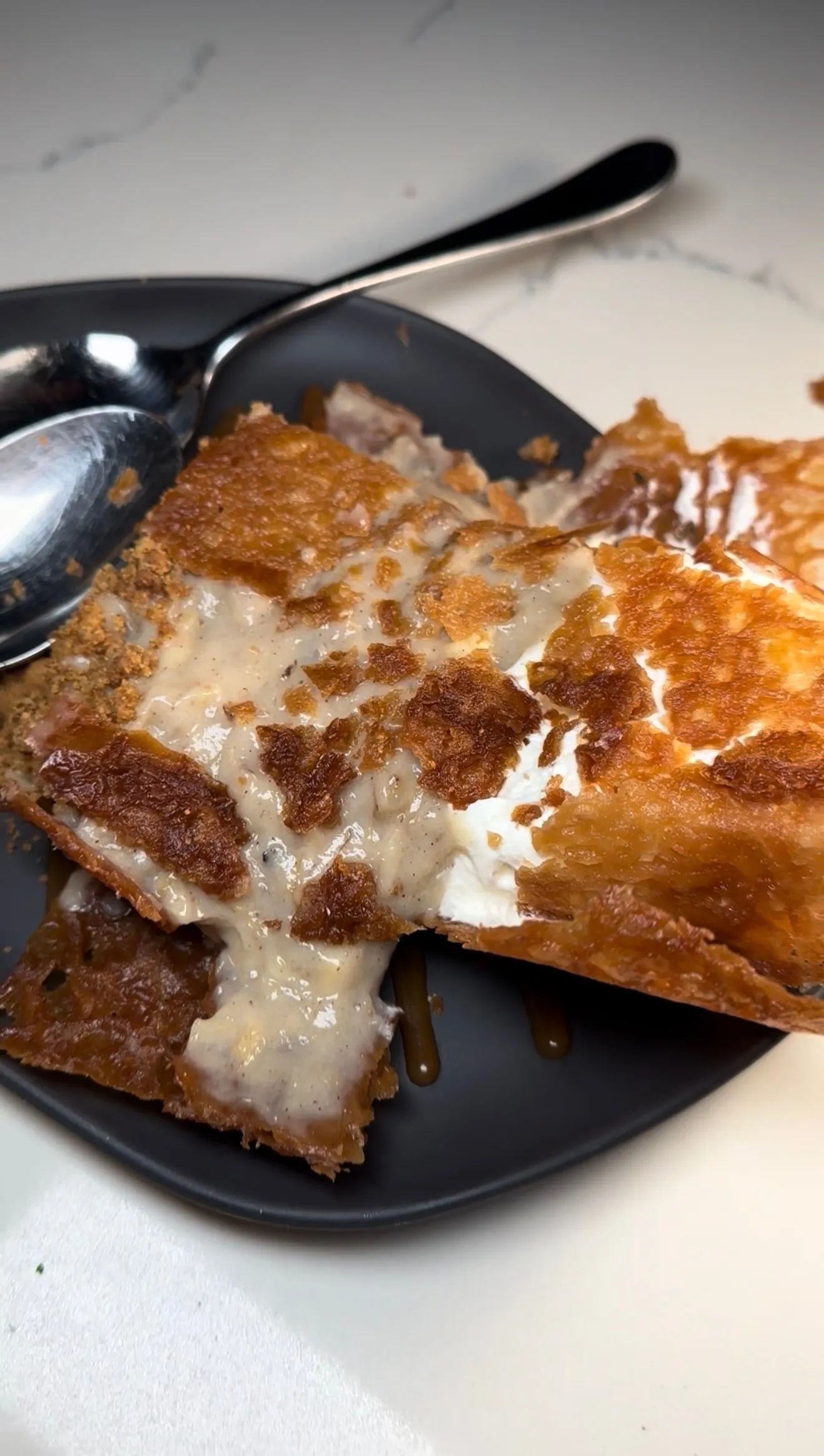
Bananas in a Box was the dessert that ended every meal at China Grill, the restaurant that helped define Asian-fusion dining in New York and Miami. Caramelized bananas folded into a rich caramel pastry cream, loaded into a crispy, hollow caramel tuile shell, then topped with whipped cream and a drizzle of dark amber caramel sauce. Every component is a variation on caramel, and together they create a dessert with four distinct textures in a single bite: shattered sugar, silky custard, warm fruit, and airy cream. This recipe breaks it into stages so you can prep over a few hours and assemble at the moment of serving.
Jump to Recipe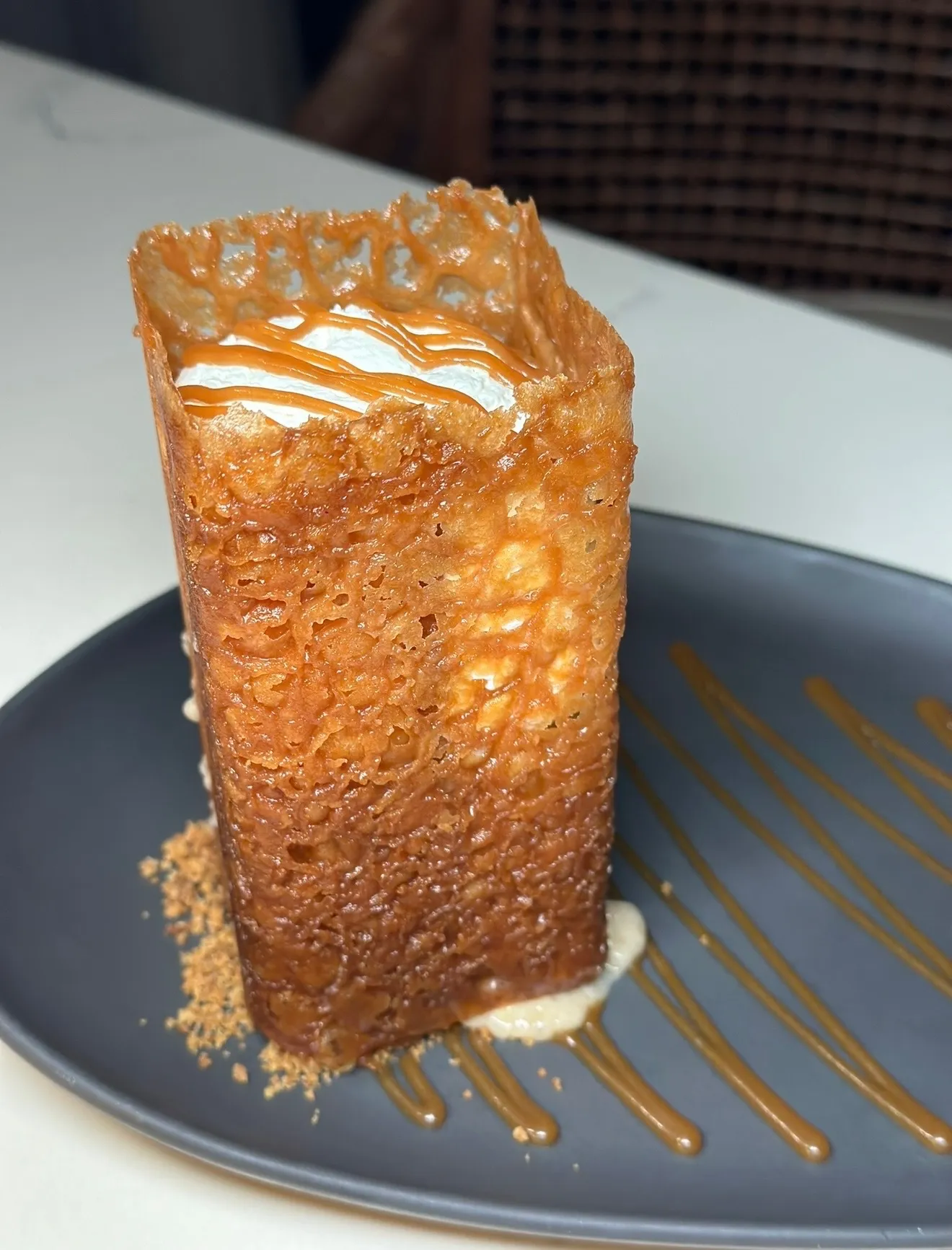
What Makes Bananas in a Box a Showstopper Dessert
China Grill’s Signature Finale
Bananas in a Box was the signature dessert at China Grill, the legendary restaurant that defined upscale Asian-fusion dining in New York and Miami from the late 1980s through the 2000s. Every component is built from caramel in a different form: a deep amber caramel sauce, a silky caramel pastry cream, cinnamon-kissed caramelized bananas, and a crispy caramel tuile shaped into a hollow box that holds everything together. When it arrives at the table, the golden tuile cage looks architectural, almost too precise to eat. Then you break through it with a spoon and the whole thing collapses into warm banana cream and shattered sugar.
This recipe has four distinct components, and each one is straightforward on its own. However, the assembly requires timing. You need the caramel sauce made first (it keeps), the pastry cream chilled or warm, the bananas caramelized right before serving, and the tuile boxes baked and shaped in advance. Consequently, this is a dessert you prep over a few hours, not 30 minutes. The reward is a restaurant-level presentation that nothing else in your dessert rotation can match.
Building the Caramel Sauce and Pastry Cream
Dry Caramel vs. Wet Caramel: Why Water Matters
This recipe uses the wet caramel method: sugar dissolved in water with a pinch of cream of tartar before heating. Adding water slows the caramelization process and gives you a wider window between “perfect amber” and “burnt.” Dry caramel (sugar alone in a pan) works faster but is much harder to control. One distracted moment and the sugar goes from golden to black. Cream of tartar prevents crystallization, which is when stray sugar crystals cause the entire batch to seize into a grainy mess. Do not stir the sugar once it starts boiling. Swirl the pan gently if needed to distribute heat evenly.
When the caramel reaches deep amber, roughly the color of dark honey, remove it from the heat immediately and whisk in the heavy cream. It will bubble violently. This is normal. Stand back, whisk steadily, and the cream will incorporate into a smooth, glossy sauce within 30 seconds. If lumps form, return the pan to low heat and stir until they dissolve. This sauce is the foundation for the pastry cream and also serves as the drizzle over the finished dessert.
Pastry Cream with Caramel Depth
Standard pastry cream uses vanilla as its primary flavor. This version replaces vanilla with 1 cup of the caramel sauce, which transforms the cream into something richer, darker, and more complex. Heat the caramel with 1 1/4 cups of milk until just boiling. In a separate bowl, whisk together the remaining cup of milk with 15 egg yolks, flour, and cornstarch. Strain the yolk mixture through a fine sieve to catch any chalazae or lumps.
Temper the hot caramel milk into the yolk mixture slowly, whisking constantly. Dumping hot liquid into raw eggs scrambles them. A thin, steady stream while whisking allows the eggs to warm gradually without cooking. Return everything to the pot and cook over medium heat, stirring continuously, until the cream thickens enough to coat the back of a spoon. It should be silky, rich, and taste like butterscotch crossed with custard. Chill if making ahead, or keep warm for immediate assembly.
Caramel Tuile: Baking the Edible Box
Why Timing Is Everything with Tuile
Caramel tuile batter is a simple mix of softened butter, powdered sugar, corn syrup, and flour. Spread it thin (7 inches by 3 inches) on a silicone mat or nonstick surface and bake at 300°F for about 10 minutes until golden. Here is where speed becomes critical: tuile is pliable for roughly 30 seconds after leaving the oven. During that window, you need to lift each strip and wrap it around a greased rolling pin, box mold, or any form that gives you a hollow container shape. Once it cools, it locks into position and becomes rigid and brittle.
If a tuile hardens before you can shape it, return it to the oven for 15 to 20 seconds to re-soften. Work in small batches of 2 to 3 strips at a time so you have enough time to shape each one. Grease your mold lightly with cooking spray or butter to prevent sticking. Store finished tuile boxes in an airtight container at room temperature. Humidity is the enemy. Any moisture in the air softens the tuile within hours. Therefore, bake and shape the boxes the same day you plan to serve.
Simpler Alternatives if Tuile Feels Intimidating
If shaping tuile boxes feels like too much for a first attempt, crispy wonton wrappers or phyllo cups make a quicker substitute. Brush wonton wrappers with melted butter and sugar, press into a muffin tin, and bake at 350°F for 8 to 10 minutes until golden and crisp. You lose the caramel tuile flavor but keep the structural concept: a crispy, edible vessel filled with warm banana cream. Another option is to skip the box entirely and serve the caramelized banana pastry cream in a bowl, topped with shattered tuile pieces for crunch.
Bananas in a Box
Ingredients
Make the caramel sauce first (it keeps for days). Bake and shape the tuile boxes next. Prepare the pastry cream. Caramelize the bananas right before serving. Assembly takes 5 minutes when everything is prepped.
You have about 30 seconds after the tuile leaves the oven to shape it. Work in batches of 2 to 3 strips. If one hardens before you shape it, return it to the oven for 15 to 20 seconds to re-soften.
Hot caramel causes severe burns. When adding cream, stand back. It will bubble violently. Use a long-handled whisk and keep children away from the stove during this step.
Step-by-Step Instructions
Step 1: Make the Caramel Sauce
Combine 2 cups sugar, 1/2 cup water, and 1/8 teaspoon cream of tartar in a heavy saucepan. Stir to dissolve the sugar, then bring to a boil over medium-high heat. Stop stirring once it boils. Let it cook undisturbed until the color reaches deep amber, roughly the shade of dark honey. This takes 8 to 12 minutes. Swirl the pan gently if one side darkens faster.
Remove from heat immediately and carefully whisk in 1 cup heavy cream. It will bubble aggressively. Keep whisking until smooth. Set aside 1 cup of this sauce for the pastry cream. Reserve the rest for drizzling over the finished dessert.
Step 2: Make the Caramel Pastry Cream
Heat 1 cup of the caramel sauce with 1 1/4 cups milk in a saucepan until it just reaches a boil. In a separate bowl, whisk together 1 cup milk, 15 egg yolks, 2 tablespoons flour, and 1 teaspoon cornstarch. Strain the yolk mixture through a fine-mesh sieve into a clean bowl.
Slowly pour the hot caramel milk into the yolk mixture in a thin stream, whisking constantly to temper the eggs without scrambling them. Return everything to the saucepan and cook over medium heat, stirring continuously, until the cream thickens enough to coat the back of a spoon. Chill if making ahead, or hold warm for immediate assembly.
Step 3: Bake and Shape the Tuile Boxes
Cream 1 pound softened butter with 1 pound confectioners’ sugar until light and fluffy. Mix in 1/2 cup corn syrup, then 1 1/2 cups flour until smooth. Spread the batter into thin strips (about 7 inches by 3 inches) on a silicone baking mat or nonstick tray. Bake at 300°F for approximately 10 minutes until golden.
Immediately after removing from the oven, lift each warm tuile strip and wrap it around a greased rolling pin or box mold to form a hollow container shape. Hold for 10 to 15 seconds until it begins to set, then slide off and let cool completely. Work quickly in batches of 2 to 3 at a time. Store shaped boxes in an airtight container at room temperature until ready to assemble.
Step 4: Caramelize the Bananas
Melt 1 tablespoon butter in a large skillet over medium heat. Add 9 banana halves and sprinkle with 1 tablespoon sugar and 1/4 teaspoon cinnamon. Cook for 1 to 2 minutes, turning once, until the sugar caramelizes and the edges turn golden brown. Remove from heat immediately. Overcooked bananas turn mushy and lose their structure.
Step 5: Assemble and Serve
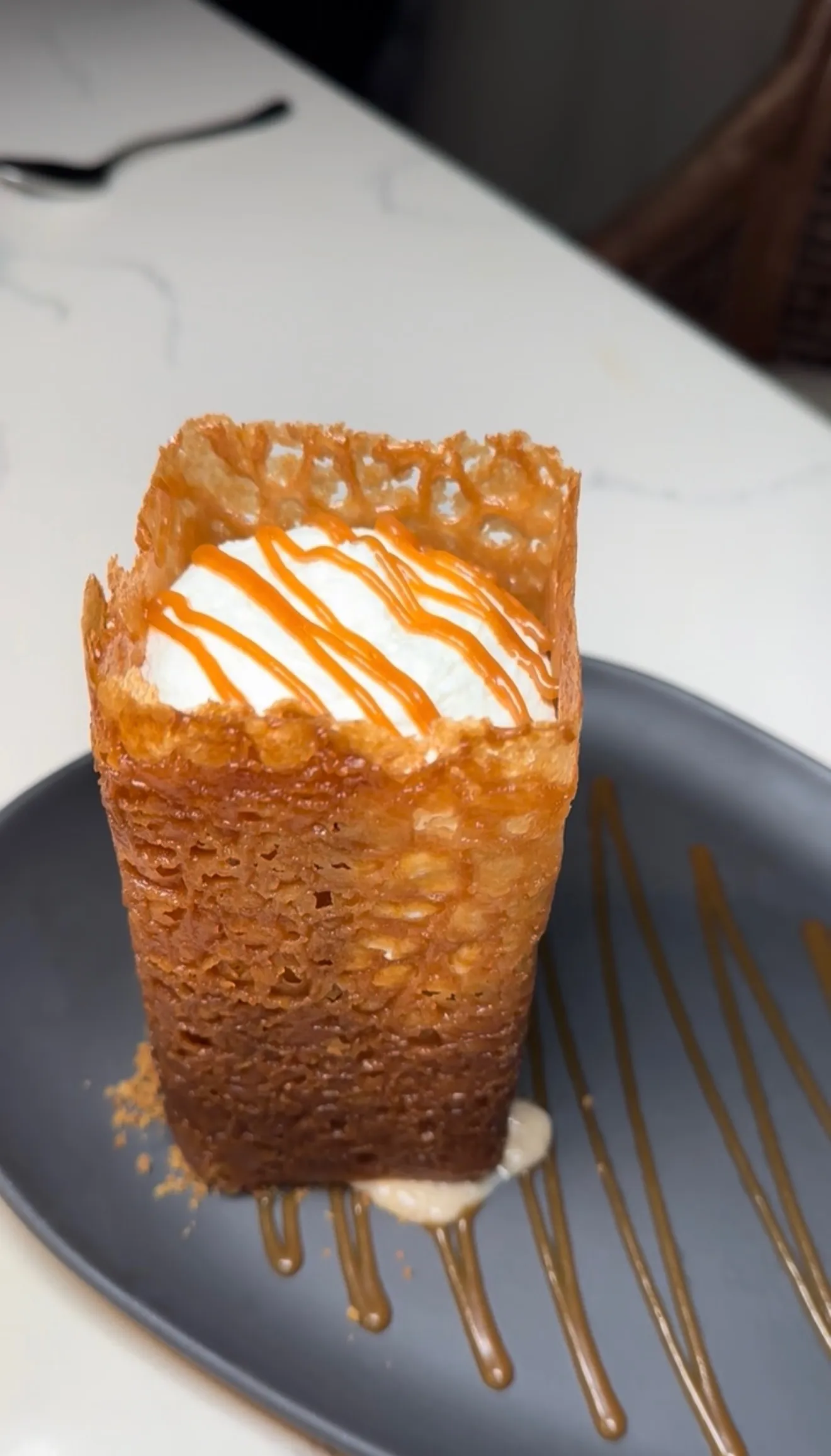
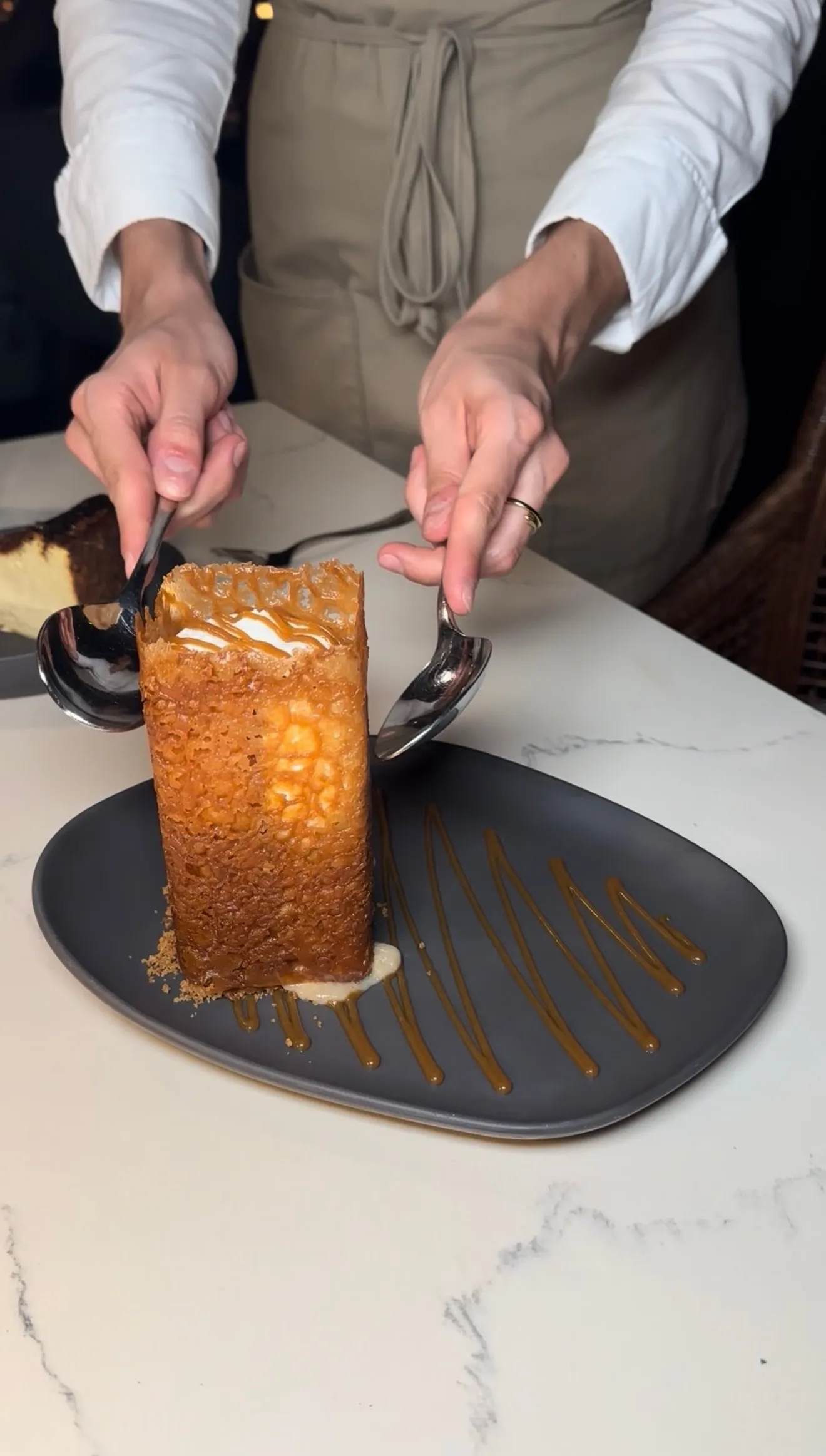
Toss the warm caramelized bananas gently into the pastry cream. Fill each tuile box with the banana cream mixture. Top with a dollop of whipped cream. Drizzle remaining caramel sauce over the top and around the plate. Serve immediately while the tuile is still crispy and the bananas are still warm. Every minute that passes, the pastry cream softens the tuile, so timing the assembly to the moment of serving is essential.
Bananas in a Box (China Grill Style)
Ingredients
Equipment
Method
- Combine sugar, water, and cream of tartar in a saucepan. Bring to a boil without stirring. Cook until deep amber. Remove from heat and carefully whisk in heavy cream until smooth. Set aside.
- Heat 1 cup caramel sauce with 1 1/4 cups milk to just boiling. Whisk 1 cup milk with egg yolks, flour, and cornstarch. Strain through sieve. Temper hot liquid into yolks slowly. Return to heat and cook until thick. Chill or hold warm.
- Cream butter and powdered sugar until fluffy. Mix in corn syrup and flour. Spread into thin strips (7″x3″) on silicone mat. Bake at 300°F for 10 minutes until golden. Immediately shape around greased mold into box form. Cool completely.
- Melt butter in a skillet. Add banana halves, sugar, and cinnamon. Cook 1-2 minutes until lightly caramelized. Remove from heat.
- Toss warm bananas into pastry cream. Fill tuile boxes with mixture. Top with whipped cream and drizzle remaining caramel sauce. Serve immediately.
Notes
Bananas in a Box — FAQ
Bananas in a Box Questions
Bananas in a Box was the signature dessert at China Grill, a landmark Asian-fusion restaurant that operated in New York and Miami. It features caramelized bananas tossed in caramel pastry cream, served inside a crispy caramel tuile shell, and topped with whipped cream and caramel sauce. Every component is built around caramel in a different form.
A tuile is a thin, crispy cookie made from butter, powdered sugar, corn syrup, and flour. After baking at 300°F until golden, it is pliable for about 30 seconds. During that window, you wrap it around a greased mold to form a hollow box or cylinder shape. Once cooled, it hardens into a brittle, edible container. If it hardens before shaping, return it to the oven for 15 to 20 seconds to re-soften.
Yes, and it is recommended. Caramel sauce keeps refrigerated for up to a week. Pastry cream can be made a day ahead and chilled. Tuile boxes should be baked the same day and stored in an airtight container at room temperature. Bananas must be caramelized right before serving, and final assembly should happen at the moment of plating. Pastry cream softens the tuile within minutes.
Crystallization happens when stray sugar crystals fall into the boiling syrup and trigger a chain reaction. Prevent this by adding 1/8 teaspoon of cream of tartar to the sugar and water before heating. Do not stir after the mixture starts boiling. If crystals form on the sides of the pan, brush them down with a wet pastry brush. Using a clean, heavy-bottomed saucepan also reduces the risk.
Substitutions and Serving
Crispy wonton wrappers or phyllo cups are the easiest substitutes. Brush wonton wrappers with melted butter and sugar, press into a muffin tin, and bake at 350°F for 8 to 10 minutes. You lose the caramel flavor but keep the crispy vessel concept. Another option is to skip the box entirely and serve the banana pastry cream in a bowl topped with shattered tuile pieces for crunch.
Pastry cream is an egg-thickened custard, and this recipe produces a large batch designed to serve 6 to 8 people generously. Egg yolks provide the richness, body, and silky texture that starch alone cannot achieve. For a smaller batch (3 to 4 servings), halve all pastry cream ingredients. Save the leftover egg whites for meringue, pavlova, or angel food cake.
Use bananas that are ripe but still firm. Yellow with a few brown spots is ideal. Overripe bananas (heavily spotted or soft) fall apart during caramelization. Underripe bananas taste starchy and will not develop the sweet, golden color you need. Cut them in half lengthwise so you get maximum flat surface contact with the hot pan for even browning.